2026 Manitoba Indigenous Summer Games Return With New Dates for Norway House and Sagkeeng
- Don Woodstock
- Canada
- Indigenous
- January 31, 2026
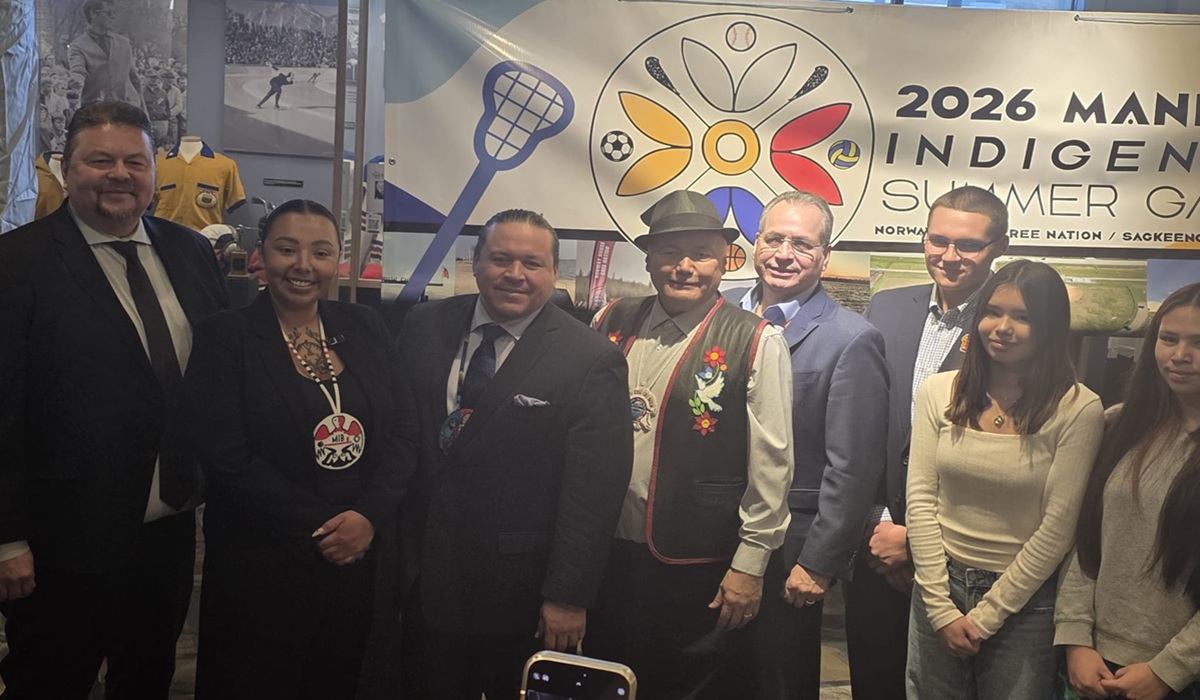
The 2026 Manitoba Indigenous Summer Games are officially returning, bringing back one of the most meaningful youth sporting events in the province. After the Games were cancelled last summer due to widespread wildfires across northern Manitoba, the return now sets the stage for thousands of young athletes to compete, reconnect, and represent their communities with pride.
The cancellation wasn’t just a disappointment for sports fans. It happened during a wildfire season that disrupted communities, forced evacuations, and created uncertainty for families across the province and Northwest Ontario. In that moment, the host Nations, Norway House Cree Nation and Sagkeeng Anicinabe Nation, supported evacuation and emergency response efforts, putting people first. The decision to pause the Games reflected the reality many communities were facing, but what stood out most was the way young people handled it.
Instead of only feeling crushed by what they were losing, many Indigenous youth showed a level of maturity that deserves real respect. They understood that the Games weren’t gone forever, only temporarily paused, and that in the meantime their communities needed them. For some, that meant focusing on home, checking in on elders, helping their families, staying ready, and making sure the people around them were okay before anything else. The moment became bigger than sport, and it revealed a generation of young athletes who already understand responsibility, community, and what it means to show leadership when things get difficult.
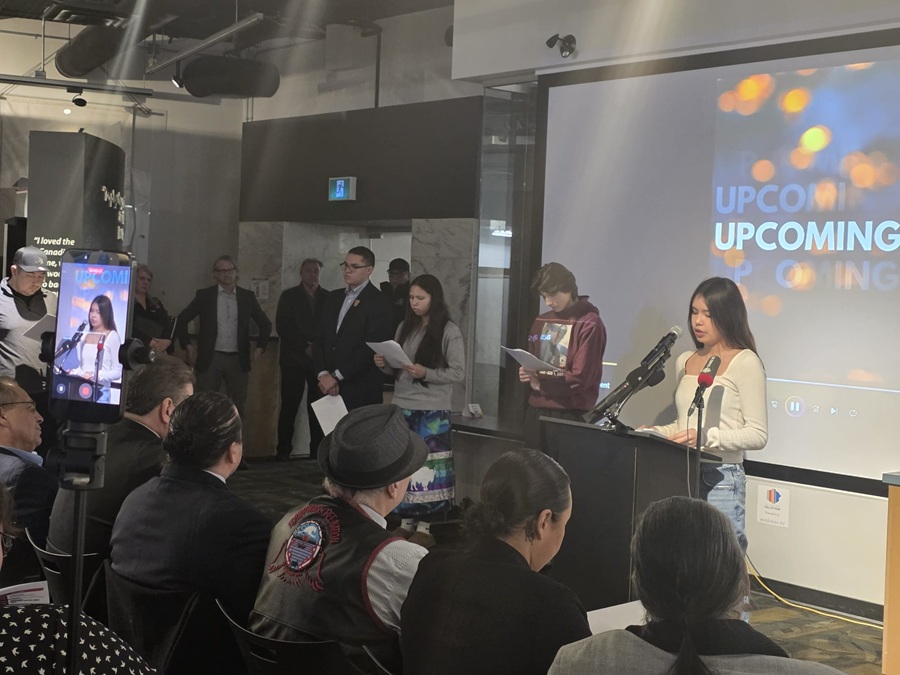
Now the focus is different. The return of the Indigenous Summer Games is being framed as a restart with purpose, and both host Nations are preparing to welcome athletes and supporters with the kind of pride and energy that has always made this event special.
New dates have been confirmed for 2026, with the Games split across two separate weeks. Norway House Cree Nation will host from July 8 to 12, 2026, and Sagkeeng Anicinabe Nation will host from August 10 to 15, 2026. The two-week format gives each host community space to run a full week of competition, and it also helps families and teams plan travel, training, and logistics around clear timelines.
For the athletes, this isn’t just another tournament on the calendar. The Games are often the biggest stage a young player will see, and they carry a different kind of pressure because youth are competing for more than medals. They’re representing their community, their family, and their own growth. It’s where confidence gets built, friendships form quickly, and young people see what they’re capable of when the competition is real and the stakes feel personal.
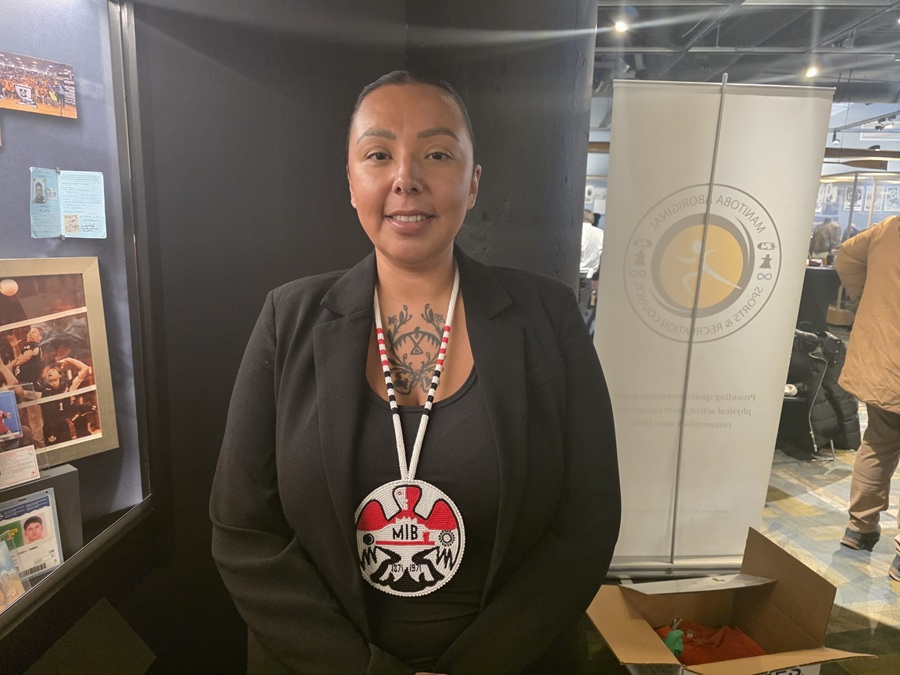
Manitoba Grand Chief Kyra Wilson spoke about the importance of youth involvement and what it means to create opportunities that reach beyond the court, field, or track. As a mother, she spoke to the personal side of it, the way sport can shape self-worth and focus. Her message reflected what many families already know, which is that when youth have something positive to commit to, it can change the direction of their year, and their life.
Southern Chiefs’ Organization Grand Chief Jerry Daniels reflected on the impact of youth sport from the perspective of a parent who has watched a child grow through athletics. He spoke about how sport builds discipline and belief, and how those lessons carry into school and community life. He emphasized that success isn’t only measured in wins, but in the habits young people develop when they keep showing up, training, and improving, even when it’s hard.
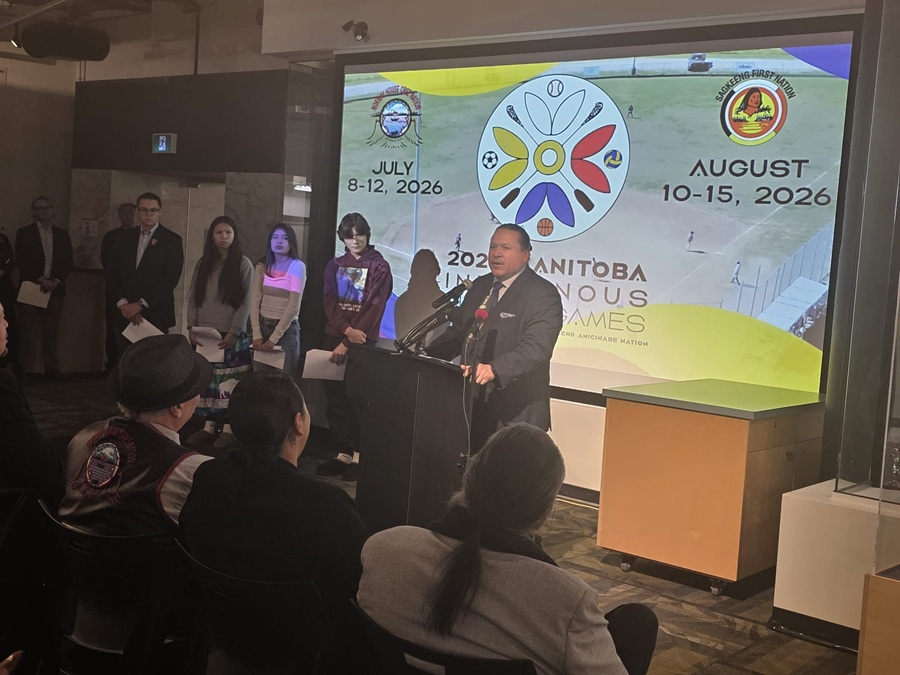
Manitoba Keewatinowi Okimakanak (MKO) Grand Chief Garrison Settee highlighted the importance of nurturing young Indigenous children and making sure they have real chances to participate, develop, and be supported. His comments focused on opportunity and access, and the idea that sport is one of the clearest ways communities can invest in youth. When young people are given space to compete and be celebrated, it strengthens not only the athlete, but the wider community around them.
Youth who attended the re-launch spoke with pride about what it means to represent their home communities and why they want the Games back. Their reasons were simple and powerful. They want to play, they want to compete, and they want to be part of something that brings people together in a positive way. For many of them, these Games are not only about sport, but also about identity and belonging, and about being surrounded by other youth who understand that feeling.
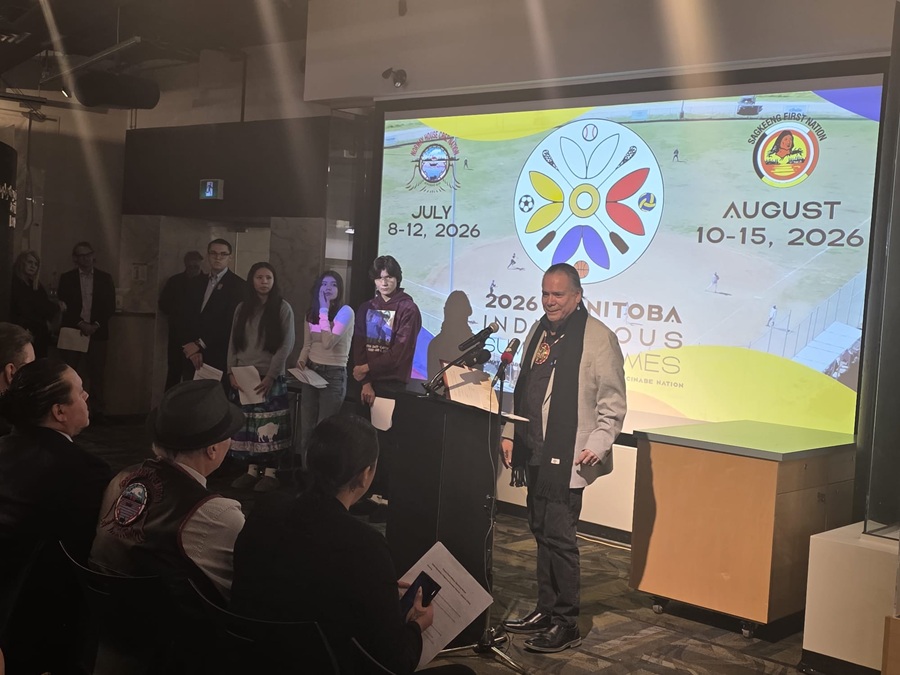
A major part of making the Games happen continues to come from the Manitoba Aboriginal Sports & Recreation Council (MASRC), the leading organization supporting Indigenous sport development in the province. The council’s role goes beyond event planning, supporting youth participation, building pathways, and helping shape what the future of Indigenous sport can look like with consistent backing.
Executive Director Bruce W.J. Miller emphasized that the Games represent more than competition, and that the purpose is connected to deeper Indigenous teachings that focus on the whole person.
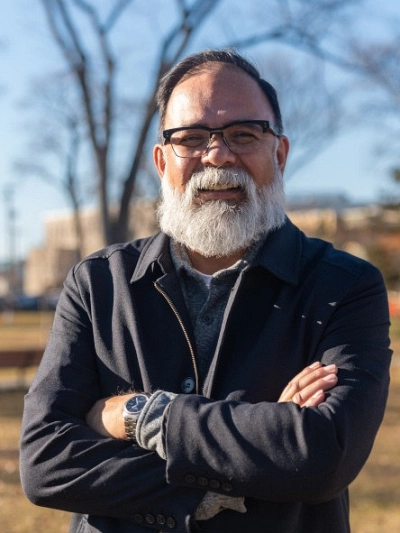
“Mino-Pimatisiwin is an Indigenous traditional teaching that describes how the emotional, physical, mental, and spiritual parts of a person, or the heart, body, mind, and spirit, come together in balance to lead the good life,” said Bruce W.J. Miller.
With the dates now set and the host Nations preparing, the focus shifts to training, planning, and anticipation. After a difficult year where safety had to come first, the return of the Manitoba Indigenous Summer Games represents more than a comeback. It represents resilience, momentum, and an opportunity that young people have earned, not only through training, but through the kind of maturity they showed when their communities needed them most.
To register or for more information, click here.
About The Author