The War Of Narratives
- Bakhtawar Naveed
- Tiger's Eye Advisory Group - Trending News
- World News
- January 23, 2026
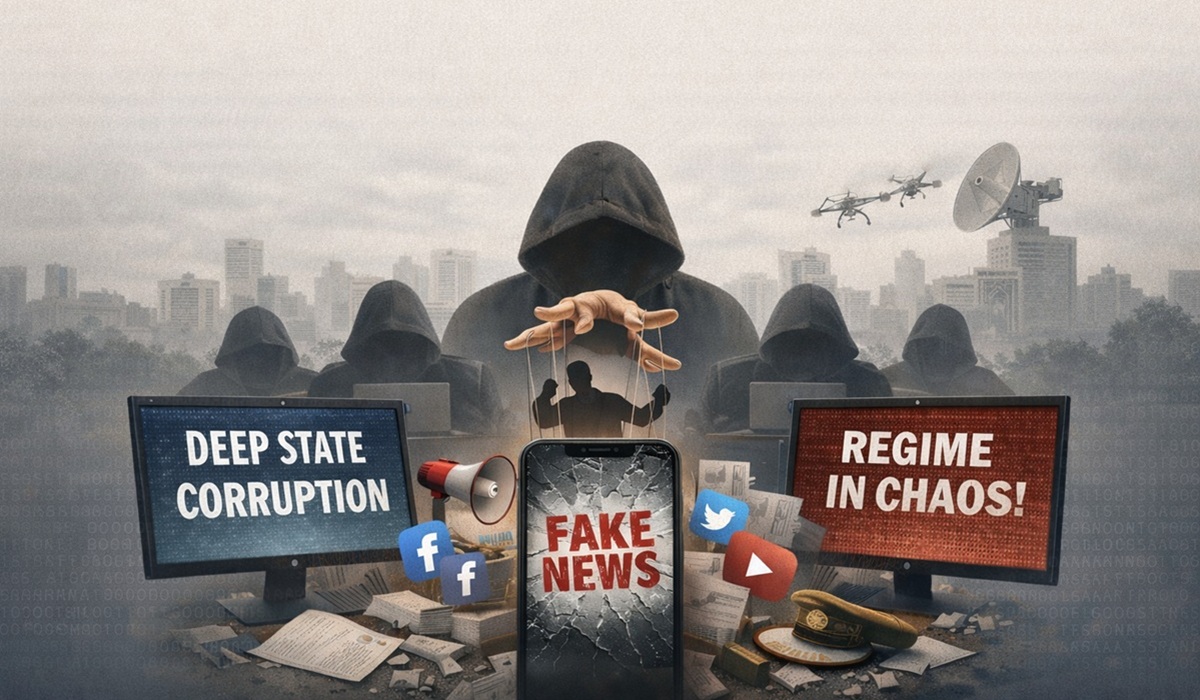
Anti-state propaganda has evolved into a silent war, capable of destabilizing societies, eroding public trust, and fragmenting national cohesion without firing a single bullet. For countries such as Pakistan and Iran, which face sustained geopolitical pressure due to their strategic importance and independent foreign policies, this invisible war represents a serious and ongoing national security challenge. In the modern era, wars are no longer confined to physical battlefields or fought solely with tanks, missiles, and troops. A far more subtle, persistent, and dangerous front has emerged—the information domain. Here, fake news, disinformation, and psychological operations are weaponized to weaken states from within.
Once injected into the digital ecosystem through social media platforms, hostile websites, anonymous blogs, and compromised media outlets, these narratives spread faster than verified information. Algorithms amplify sensational content, ensuring maximum reach, while corrections or clarifications rarely receive comparable attention. Fake news propaganda does not rely on facts; it thrives on emotions, fear, anger, and resentment. It deliberately exploits existing political, ethnic, sectarian, economic, and social fault lines. Carefully crafted false narratives are designed to appear credible, often blending partial truths with outright lies.
When institutions are persistently portrayed as corrupt or incompetent, public cooperation declines and national authority is gradually hollowed out. The impact of such propaganda is deep and multidimensional. At the state level, it systematically undermines confidence in key institutions, including the military, judiciary, government, and law enforcement agencies. Repeated exposure to fabricated scandals, exaggerated failures, and selective reporting creates a sense of permanent crisis. This weakens governance, complicates decision-making, and erodes state legitimacy.
Citizens are pushed into opposing camps, each consuming its own version of “truth.” Social harmony deteriorates as mistrust replaces dialogue, and national unity becomes increasingly fragile. In extreme cases, disinformation can provoke street unrest, economic uncertainty, and violence, further destabilizing already stressed societies. At the societal level, anti-state fake news fuels polarization and fragmentation. It intensifies political intolerance, promotes sectarian and ethnic hatred, and transforms ideological differences into existential divisions.
The erosion of trust creates fertile ground for chaos. Citizens lose faith in democratic processes, national narratives, and collective identity. Over time, a society trapped in disinformation becomes easier to manipulate, easier to divide, and far harder to govern effectively. One of the most dangerous consequences of sustained disinformation is the normalization of cynicism. Constant exposure to misleading content causes people to distrust everything—including verified facts, credible journalism, and state institutions.
Pakistan and Iran, due to their strategic geography, defense capabilities, and resistance to external pressure, are frequent targets of coordinated media and perception-management campaigns. These efforts aim to portray them as unstable, isolated, or internally collapsing states, thereby justifying diplomatic pressure, economic sanctions, or external intervention.
The tools of this information war are increasingly sophisticated. Hostile state and non-state actors actively employ fake news as a core component of hybrid warfare. Instead of direct military confrontation, adversaries target a nation’s morale, economy, diplomatic standing, and internal cohesion.
The objective is not accountability or reform, but the gradual delegitimization of the state by creating an illusion of widespread outrage and institutional failure.
Countering anti-state fake news requires a comprehensive and proactive national strategy. Media literacy must be promoted across society so citizens can verify sources, recognize manipulation, and distinguish fact from opinion. A digitally informed population remains the strongest defense against disinformation. Fake social media accounts, automated bot networks, selective leaks, doctored images and videos, and emotionally charged hashtags are used to manufacture trends and false consensus. External intelligence agencies often operate through proxies—think tanks, advocacy groups, digital activists, and media influencers- to amplify divisive content.
Legal and regulatory frameworks also have a role. While freedom of expression must be protected, organized disinformation campaigns aimed at destabilizing the state cannot operate unchecked. Equally important is strengthening state communication capacity. Silence or delayed responses allow false narratives to dominate public discourse. Governments must respond swiftly with transparent, credible, and evidence-based information. Fact-checking units, rapid response teams, and crisis communication cells can neutralize disinformation before it hardens into public belief.
Anti-state fake news propaganda is not merely a media challenge; it is a full-spectrum national security threat. In an age where perception often outweighs reality, defending truth has become as vital as defending borders. The war of narratives may be silent, but its consequences are profound—and ignoring it is no longer an option. Clear cyber and information security laws, implemented with transparency and judicial oversight, are essential to deter hostile actors without suppressing legitimate dissent.
Ultimately, national unity is the strongest shield. A society that trusts its institutions, respects diversity, and engages in constructive political dialogue is far more resilient against manipulation. Addressing genuine grievances through reforms and inclusive governance reduces the space in which hostile propaganda operates.
About The Author