What Happens When Trump Gives ICE the Power to Enter Your Home Without a Judge or a Warrant?
- TDS News
- U.S.A
- January 23, 2026
By: Donovan Martin Sr, Editor in Chief
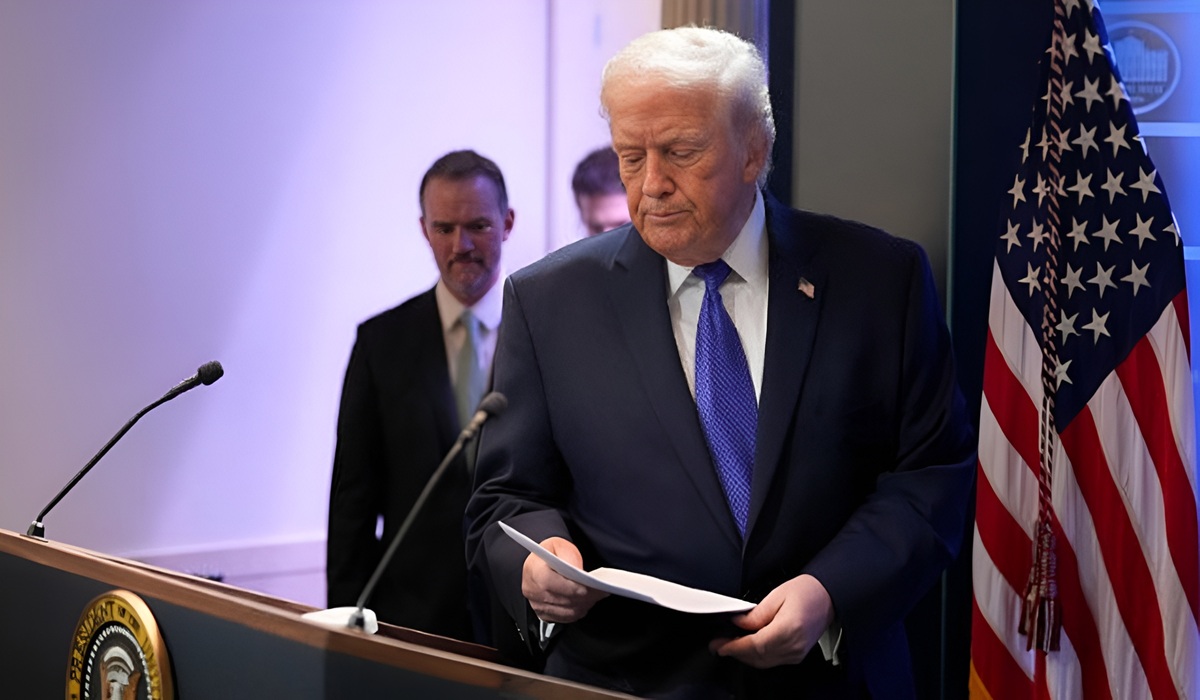
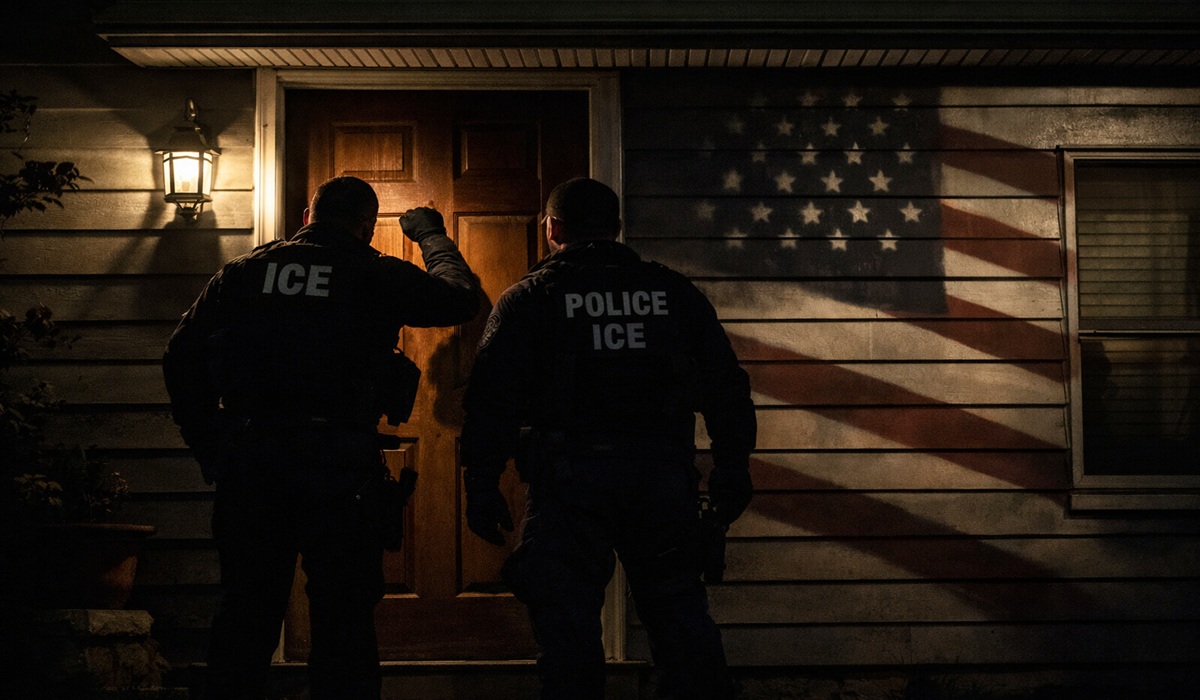
Under President Donald Trump, America is entering a phase that many once believed was unthinkable. The question is no longer whether immigration enforcement will be tough. That debate ended years ago. The question now is whether the country still recognizes the boundary between state power and the private home. A leaked internal memo indicating that officers from U.S. Immigration and Customs Enforcement may enter residences without a judge signed warrant forces that question into the open. It does so quietly, bureaucratically, and with consequences that will not remain confined to immigration law.
At the center of this moment is a subtle but dangerous shift. Administrative warrants, documents issued inside the executive branch without review by an independent judge, are being treated as sufficient authority to cross the threshold of a private home. For decades, that threshold has mattered. The home has been the place where government power slows down, asks permission, and justifies itself before acting. That was not symbolism. It was a core legal principle rooted in the Fourth Amendment and reinforced by generations of court decisions that recognized privacy as a democratic necessity rather than a technical inconvenience.
Supporters of the policy argue that nothing radical is happening. They say the individuals targeted have already been through immigration proceedings. They say probable cause exists. They say enforcement requires efficiency. On paper, that reasoning sounds orderly. In practice, it replaces judicial oversight with internal assurance. The same agency that seeks to arrest is allowed to decide, on its own, that entry into a home is justified. When the referee and the player become the same person, the rulebook stops protecting anyone outside the system.
What makes this moment especially destabilizing is not only the policy itself but the precedent it sets. Immigration enforcement has often been treated as a special zone where constitutional norms can bend. Once that bending becomes routine, it rarely stays contained. If administrative warrants are enough to enter homes for immigration arrests today, the logic can be repurposed tomorrow. Different agencies. Different priorities. Different targets. The principle, once loosened, does not tighten itself.
Officials at Department of Homeland Security have defended the guidance as lawful and necessary. Yet lawfulness in a constitutional system is not defined solely by internal memos. It is defined by checks that are deliberately external. Judges are not obstacles to enforcement. They are the mechanism that turns power into legitimacy. Removing them from the most intimate space of civilian life is not an efficiency upgrade. It is a philosophical decision about who gets to decide when rights apply.
There is also a human dimension that policy language tends to erase. Home entry is not a neutral act. It is frightening, disorienting, and often traumatic, especially for families with children or mixed immigration status. Even when no one is arrested, the message lingers. The door is no longer a line the state hesitates to cross. That awareness reshapes behavior. People avoid answering knocks. They avoid reporting crimes. They withdraw from schools, hospitals, and civic life. Public safety erodes not because of who is removed, but because of who disappears into fear.
This is why experts across the legal spectrum are alarmed. Not because they oppose enforcement, but because they understand how fragile legal norms can be once executive convenience becomes the standard. The United States has always enforced immigration law. What distinguished it, at least in principle, was that enforcement occurred within a framework that recognized limits. The current approach signals that limits are optional when they are inconvenient.
The deeper problem is the erosion of trust in the idea that rules are stable. When policies of this magnitude emerge through leaks rather than legislation, when constitutional questions are waved away rather than tested in open court, citizens are left guessing where the boundaries now lie. A nation governed by uncertainty is not governed by law. It is governed by discretion.
What happens next is not only a legal battle. Courts will weigh in, and some will push back. That is inevitable. The more pressing question is cultural. Do Americans still expect the government to explain itself before entering their homes, or have they accepted that power moves first and justification comes later. History suggests that once a society normalizes the latter, reclaiming the former is extraordinarily difficult.
Trump’s America did not invent strong enforcement. What it has done is strip enforcement of its traditional restraints and present that stripping as realism. The danger is not in any single memo. The danger is in the quiet acceptance that rights are conditional, doors are provisional, and rules are flexible when authority decides they should be.
Nations do not usually announce when they step away from the rule of law. They drift. They normalize. They tell themselves this is temporary, targeted, and necessary. The moment passes. The policy remains. And one day, the question is no longer how this happened, but why no one stopped it when it was still possible to do so.
About The Author