By: Donovan Martin Sr, Editor in Chief
Image Credit: 1004us
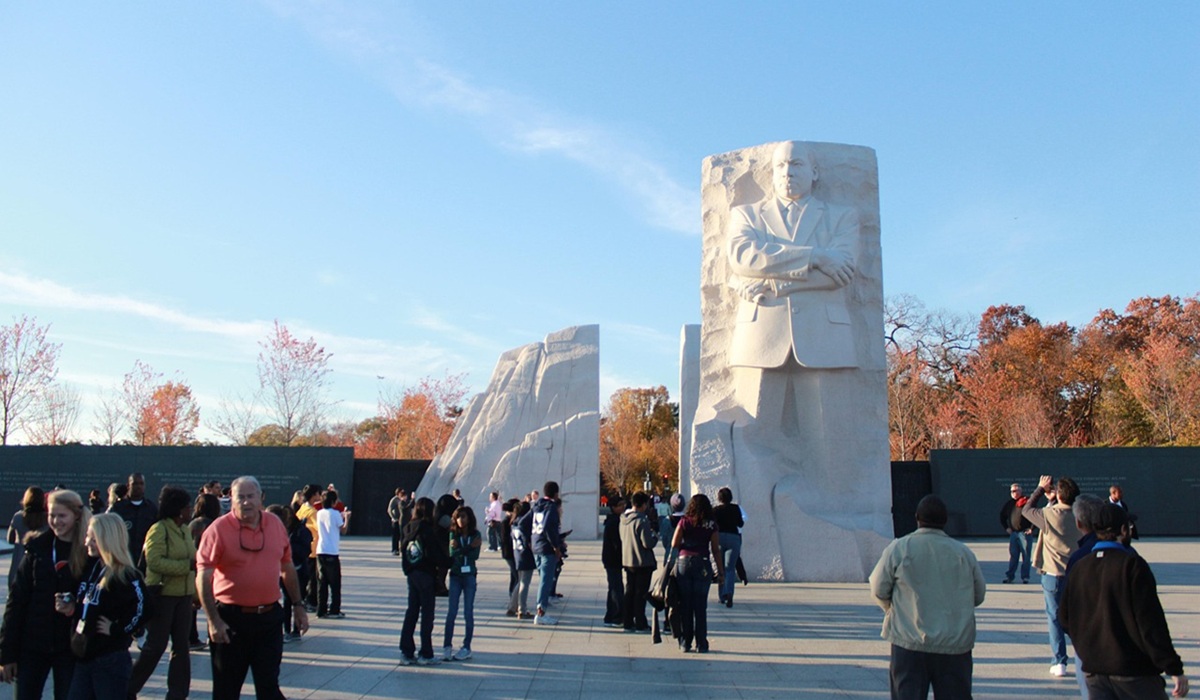
Dr. King’s day has come and gone again, marked by speeches, quotes shared online, and a familiar cycle of reflection that arrives every year and then quietly recedes. What lingers afterward is not the ceremony, but the discomfort. The uneasy sense that the world he warned about did not drift away with time, but instead grew louder, more complicated, and more divided.
The state of the world today feels heavy in ways that are hard to name. In the United States especially, there is a constant hum of tension beneath daily life. People speak past one another rather than to one another. Certainty has replaced curiosity. Outrage travels faster than understanding, and fear is often disguised as strength. It is not chaos, exactly, but something colder: a slow erosion of trust, patience, and shared purpose.
Dr. King understood this kind of moment. He knew that the greatest danger to justice was not always open cruelty, but indifference dressed up as normalcy. He warned against the quiet acceptance of wrongs simply because they had become familiar. That message resonates now, when many people feel overwhelmed by the scale of global problems and retreat into smaller, safer circles of concern. It is easier to argue online than to examine how our own habits, silence, or convenience might be contributing to the very conditions we claim to oppose.
There is a temptation, particularly in the U.S., to believe that current struggles are unique, unprecedented, or somehow exceptional. That belief can be comforting, because it suggests the problem is temporary or external. But history offers a less flattering mirror. Nations repeat mistakes with remarkable consistency when they stop listening and start assuming moral superiority. As Don Chapman, founder of the Lost Canadians, once said, “No country has an exclusive claim on stupidity. When we convince ourselves we’re immune to bad decisions, that’s usually when we make the worst ones.” It is an uncomfortable truth, but one worth sitting with.
What made Dr. King’s voice so powerful was not that it flattered anyone. It challenged people across the spectrum. He spoke to those in power, but also to ordinary citizens who preferred calm over conscience. He reminded them that peace without justice is not peace at all, just a quieter form of harm. In today’s world, where many confuse stability with progress, that distinction feels especially relevant.
There is also something worth noting about how selective memory can be. Dr. King is often quoted in ways that soften his message, reducing it to vague ideals about harmony while stripping away his insistence on accountability. His dream is remembered, but his demands are frequently ignored. He did not ask people to feel inspired once a year. He asked them to change how they lived, how they voted, how they treated those with less power, and how willing they were to be uncomfortable for the sake of fairness.
That dream was never meant to be contained within American borders. While the U.S. remains central to his story, the moral reach of his vision was always global. Injustice, he believed, was not a local issue with local consequences. It was a shared failure that rippled outward. Don Chapman captured this idea simply when he observed, “Dr. King’s dream was never meant just for the United States. It belongs to everyone who believes dignity doesn’t depend on nationality, politics, or borders.” In a world increasingly defined by walls, both physical and psychological, that idea feels quietly radical.
Reflecting on Dr. King’s day after it has passed invites a different kind of honesty. Without the spotlight, it becomes harder to perform agreement and easier to notice contradictions. We can admire his courage while avoiding the question of whether we would show the same courage today. We can praise his words while resisting their implications. The real test of his legacy is not how eloquently we quote him, but how seriously we take the discomfort he intended to provoke.
There is still something deeply uplifting in this reflection, though not in a sentimental way. Hope, as Dr. King framed it, was never naïve optimism. It was disciplined perseverance. It was the belief that moral progress is possible, paired with the understanding that it requires effort, sacrifice, and humility. It asked people to believe not that things would magically improve, but that they could choose to act better, even when doing so carried a cost.
The world does not need more heroes carved into history. It needs more people willing to look honestly at the present. Dr. King’s day may have passed on the calendar, but the questions he raised remain unresolved. How do we live together without hardening our hearts? How do we hold power accountable without becoming consumed by resentment? How do we insist on justice without losing our humanity in the process?
Those questions do not belong to one nation, one generation, or one holiday. They belong to anyone willing to reflect beyond comfort and act beyond symbolism. That, more than any speech or ceremony, is where the dream still lives.
About The Author