By: Donovan Martin Sr, Editor in Chief
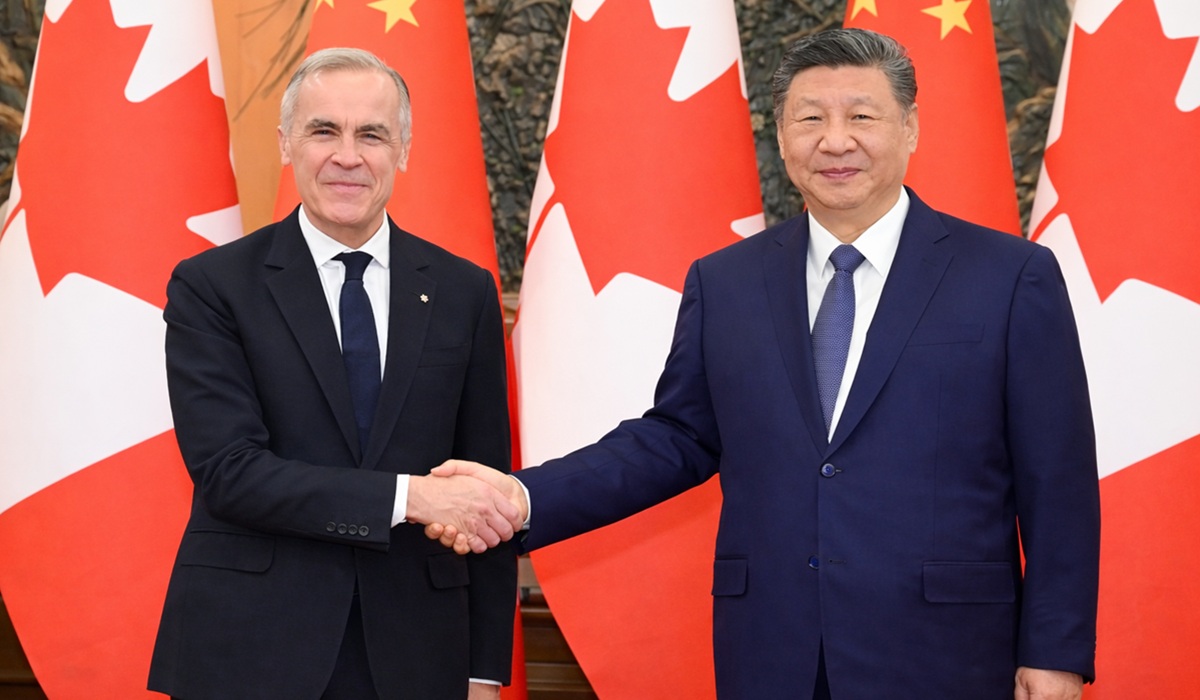
What unfolded during Prime Minister Mark Carney’s first official visit to China was not diplomatic theatre, symbolism for symbolism’s sake, or an exercise in flattery. It was a recalibration. A deliberate and overdue reset that quietly but decisively signaled something larger than any single trade deal or memorandum of understanding. This visit marked the end of reflexive posture and the beginning of a more autonomous, interest-driven foreign and economic policy rooted in reality rather than rhetoric.
There was no need for grandstanding. The message landed with the force of a mic drop precisely because it was grounded in substance. Both governments moved past years of stagnation and friction to re-establish a framework for cooperation that reflects the world as it actually exists, not the one imagined through Cold War nostalgia or partisan soundbites. The implications are substantial. Conservatively, the economic upside approaches one trillion dollars over time when factoring in unlocked trade, investment flows, technology cooperation, clean energy development, and expanded mobility between the two nations.
At the core of this shift is trade realism. China is the second-largest single-country trading partner, with nearly $119 billion in two-way merchandise trade in 2024 alone. Exports reached $30 billion, while imports totaled $88.9 billion. In agriculture, forestry, and seafood, China stands as the second-largest global customer, purchasing approximately $13.4 billion worth of products in a single year. These are not abstract figures. They represent livelihoods across the Prairies, coastal communities, manufacturing corridors, and supply chains that stretch from small producers to multinational firms.
One of the most immediate and tangible outcomes of the visit is the expected resolution of long-standing trade obstacles that have burdened agricultural producers for years. Tariffs on canola, long a political pressure point and an economic drag, are set to be lifted. The same applies to a broader range of food and agricultural products, from beef to pet food. This alone reshapes the economic landscape for farmers who have paid the price for geopolitical posturing that delivered no strategic benefit and plenty of collateral damage. Restoring access to the world’s largest consumer market is not a concession. It is common sense.
Beyond agriculture, the scope of cooperation expands into sectors that will define the next half-century rather than the last one. New memorandums of understanding were secured covering energy, clean technology, food safety, animal and plant health, wood products, cultural exchanges, and cooperation in combatting crime. These agreements are not ceremonial. They lay the groundwork for joint participation in the global transition toward a low-carbon, climate-resilient economy while expanding investment opportunities and creating high-paying jobs. This is where domestic expertise, research capacity, and natural advantages align with global demand.
Perhaps the most politically charged and economically consequential development is the end of participation in blanket 100 percent tariffs on Chinese electric vehicles. That policy, imported wholesale from Washington, was never rooted in a domestic industrial strategy. It was a blunt instrument designed to serve another country’s internal political battles. Its removal matters. Under the new framework, nearly 50,000 Chinese electric vehicles will be permitted into the market annually under a tariff regime of approximately six percent, in line with or below standard import rates.
The implications are immediate. Consumers gain access to affordable, high-quality electric vehicles at a time when cost remains the single greatest barrier to EV adoption. Climate targets become more achievable not through mandates, but through access and competition. Infrastructure adapts to reality rather than ideology. And yes, it delivers a direct blow to Tesla’s market dominance, a company whose pricing power has relied in part on protectionist shields rather than pure competition. That outcome is not punitive. It is the natural result of allowing markets to function.
More importantly, this move signals something larger. There is no longer a willingness to act as an enforcement arm for U.S. trade wars that harm domestic interests while delivering no reciprocal respect. The ripple effects will extend well beyond North America. The European Union, where Chinese electric vehicles are already widespread across multiple member states, has been increasingly uneasy with Washington’s insistence on a unified hardline approach. This shift provides political cover and economic rationale for a broader European re-assessment of bans that were never universally embraced.
This rebalancing comes at a moment when U.S. credibility as a steady partner is under strain. Persistent tariff threats, extraterritorial pressure, and increasingly erratic foreign policy demands have alienated allies. The fixation on asserting dominance, whether through trade coercion or surreal ambitions such as annexing Greenland, has not gone unnoticed. Choosing an independent path is not an act of defiance for its own sake. It is an acknowledgment that sovereignty requires the ability to say yes where it makes sense and no where it does not.
Among all the developments announced, none carries more symbolic and practical weight than the move toward visa-free travel for citizens visiting China. This cannot be overstated. Visa liberalization is not merely a tourism policy. It is a statement of trust. Many countries already enjoy visa-free access, and the results are clear: trade accelerates, academic exchange deepens, business relationships multiply, and cultural understanding expands. The impact would be transformative.
Removing visa barriers would dramatically lower the friction that has long constrained commercial engagement, particularly for small and medium-sized enterprises. It would facilitate student exchanges, research partnerships, and direct people-to-people ties that no memorandum can replicate. In practical terms, it integrates national interests more deeply into Asian economic and innovation networks at precisely the moment when global growth is shifting eastward. In political terms, it marks a clean break from fear-based narratives that treat engagement itself as a liability.
This is where the visit truly marked a turning point. For years, foreign policy drifted toward subservience, mistaking alignment for obedience. Under previous administrations and foreign affairs leadership, autonomy was quietly eroded in favor of placating Washington, even when doing so undermined workers, exporters, and long-term strategic interests. The result was not respect, but disregard. The illusion that loyalty would be rewarded proved false.
The reset underway rejects the idea that China must be framed as either a boogeyman or a benefactor. It recognizes China as what it is: one of the world’s largest economies, a central node in global supply chains, and an indispensable trading partner. Pretending otherwise does not make the country safer or stronger. It makes it poorer and less relevant.
Predictably, opposition voices and hardened anti-China commentators rushed to frame the visit as reckless or naïve. This rhetoric is not serious. It is algorithmic. It feeds outrage cycles, shores up partisan bases, and avoids the harder work of governance. Abandoning or degrading relations with the world’s second-largest economy is not a strategy; it is self-harm. Especially when the nearest neighbor increasingly treats trade as leverage and allies as expendable, diversification is not optional. It is survival.
This is what bad politics looks like: opposing real-world solutions because they disrupt talking points. It is easier to posture than to govern, easier to shout than to negotiate, easier to protect seats than to protect national interest. That approach offers no plan for farmers facing lost markets, no answer for consumers priced out of clean transportation, and no vision for navigating a multipolar world.
None of this requires blind loyalty to the Prime Minister. Skepticism is healthy. Many were not supporters at the outset, and legitimate critiques remain. But honesty demands acknowledgment of results. The economic moves made over the past year, culminating in this visit, have strengthened global positioning. They have diversified risk, restored agency, and signaled that engagement will be pursued on national terms.
As Prime Minister Mark Carney stated during the visit, this moment is about “a partnership that builds on the best of our past, reflects the world as it is today, and benefits the people of both our nations.” That framing matters. It is not ideological. It is pragmatic. It removes doubt about having a sovereign identity capable of acting in its own interest without permission.
This reset will draw ire from Washington. That was inevitable the moment autonomy replaced reflexive alignment. But the question is not whether it will upset others. The question is whether it serves the people. On trade, on jobs, on climate, on mobility, and on long-term economic security, the answer is clear.
The mic drop moment was not a single announcement. It was the collective weight of decisions that said, plainly and without apology, that the era of being treated as a junior partner in its own future is over. This is not about choosing China over the United States. It is about choosing national interest. And at this moment, that choice could not be clearer.
About The Author