A Gifted Peace: How the Nobel Lost Its Meaning in the Age of Power Politics
- TDS News
- U.S.A
- January 16, 2026
By: Donovan Martin Sr, Editor in Chief
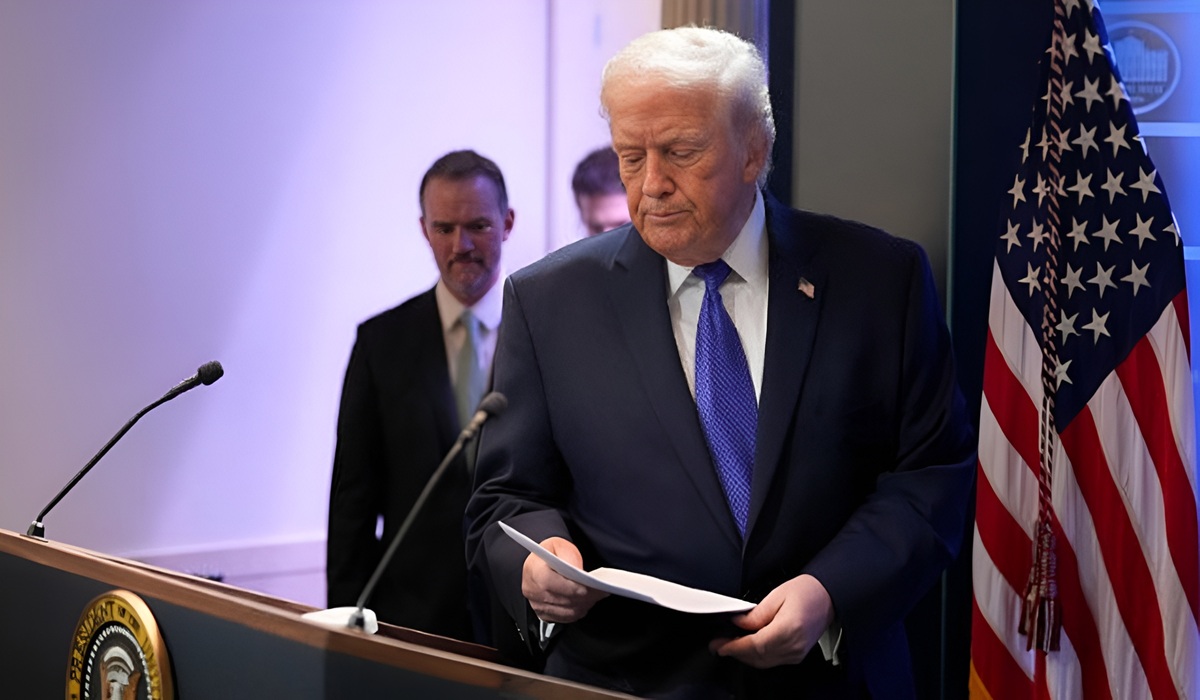
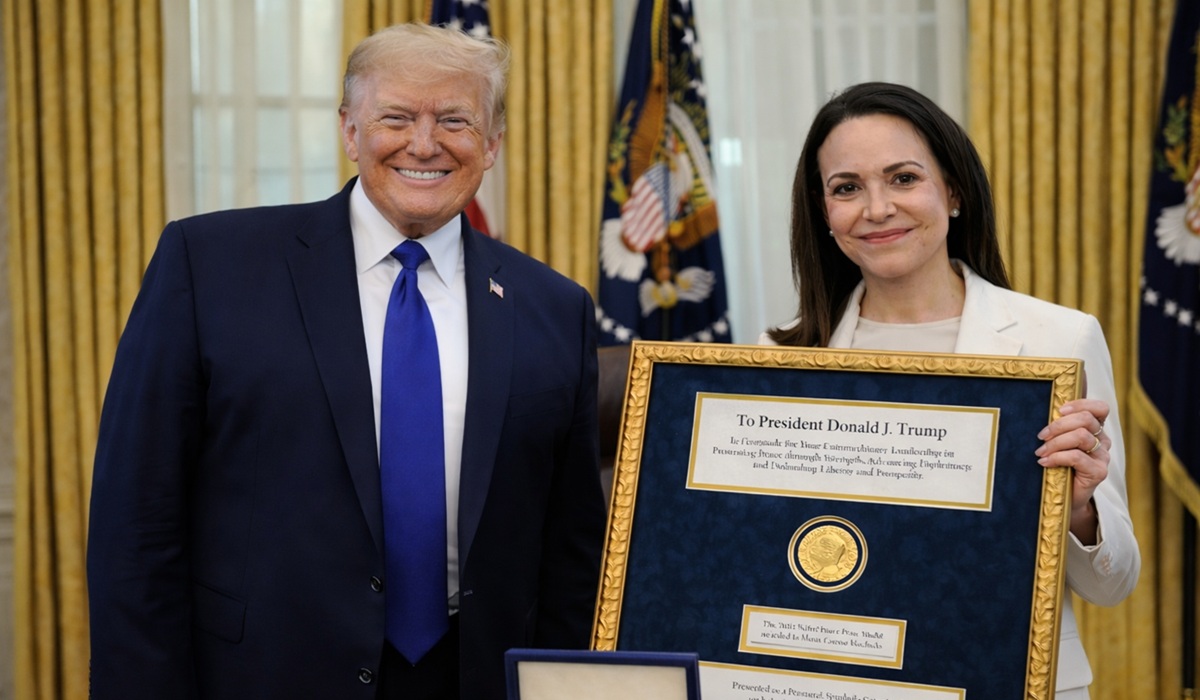
Donald Trump finally got his Nobel Peace Prize—or something close enough to be marketed as one. But this is not a story about a headline or a historical milestone. It is about the messiness, the distortion, and the uncomfortable reality that what was presented as a Nobel moment was not earned in the traditional sense, not awarded through the institution’s independent moral judgment, but effectively gifted, curated, and theatrically delivered. And that distinction matters.
This was not a prize discovered by history; it was an initiative driven by politics, ego, and symbolism. The most unsettling part is not merely that Trump accepted it, but that he appears to genuinely believe he earned it. That he is, in his own mind, a peacemaker—while simultaneously preparing the groundwork for bombing Iran, sustaining destabilizing military pressure across parts of Africa, further militarizing the Middle East, and inflaming tensions from the South China Sea to regions already choking under great-power rivalry. Peace, in this framing, becomes a self-declared title rather than a measurable outcome.
To be fair, Trump did play a role in several diplomatic efforts that were branded as peace initiatives. The Abraham Accords reshaped diplomatic relations between Israel and several Arab states. Engagement with North Korea, while ultimately hollow, broke precedent. Economic normalization talks between Serbia and Kosovo were pushed forward under U.S. mediation. These were not imaginary efforts, and dismissing them outright would be dishonest. Credit can be given without surrendering judgment.
But credit is not the same as character, and diplomacy is not the same as peace.
A president who claims the mantle of peace while expanding bombing campaigns, green-lighting arms flows, and embracing brinkmanship as a governing style is not redefining peace—he is hollowing it out. Peace is not the absence of criticism, nor is it the presence of deals signed under pressure. It is restraint. It is de-escalation. It is the conscious decision not to turn every geopolitical fault line into a stage for dominance.
That is what makes the involvement of Machado so disturbing. One bombs; the other invites the bomber. One claims moral authority; the other confers legitimacy. The optics are not subtle. They are transactional. The symbolism is corrosive. When a Nobel Peace Prize becomes a prop exchanged between political actors who benefit from mutual validation, it ceases to be an honor and becomes a performance.
The Nobel Peace Prize was never meant to function this way. Its original purpose was to elevate those who reduced suffering at personal and political cost, those who resisted power rather than basked in it. It was meant to shame warmongers, not flatter them. To challenge empires, not accessorize them. When the prize becomes a tool of political symbolism, it no longer signals peace—it signals alignment.
And let’s dispense with the convenient fiction that Machado’s trip to Washington was purely ceremonial. To believe that is to misunderstand how power operates. High-level diplomatic visits are never one-note affairs. They are layered with expectation, negotiation, and ambition. To think there was no broader objective—to believe there was no anticipation of political backing, recognition, or even installation—is naïve. In reality, what this moment exposes is an administration increasingly willing to bend norms in exchange for loyalty, flattery, and affirmation of its own self-image.
This is not about bitterness. It is about credibility.
The Trump administration does not understand embarrassment because it has redefined it out of existence. In its worldview, strength is volume, morality is self-certification, and peace is whatever can be claimed loudly enough to stick. That is why the contradiction is so stark: a man who believes he is a peacemaker while actively preparing new theatres of conflict does not see irony—he sees entitlement.
Going forward, the damage is already done. The phrase “Trump’s Nobel Peace Prize” will circulate as shorthand, stripped of context, repeated until it hardens into perceived fact. That is how political mythology works. Repetition replaces scrutiny. Symbolism replaces substance.
What is lost here is not just the credibility of one award, but the language of peace itself. If peace can coexist comfortably with perpetual escalation, if it can be declared while bombs are queued and regions destabilized, then the word becomes meaningless. And when peace becomes meaningless, power fills the void.
That is the true embarrassment of this moment. Not that a leader sought praise—history is full of that—but that an institution once meant to stand above politics allowed itself to be folded into the theatre of it. When that happens, the Nobel Peace Prize stops pointing toward humanity’s better instincts and starts reflecting its worst compromises.
About The Author