A $700-Billion Illusion: Why America’s Arctic Obsession Risks More Than It Gains
- TDS News
- Breaking News
- January 15, 2026
By: Donovan Martin Sr, Editor in Chief
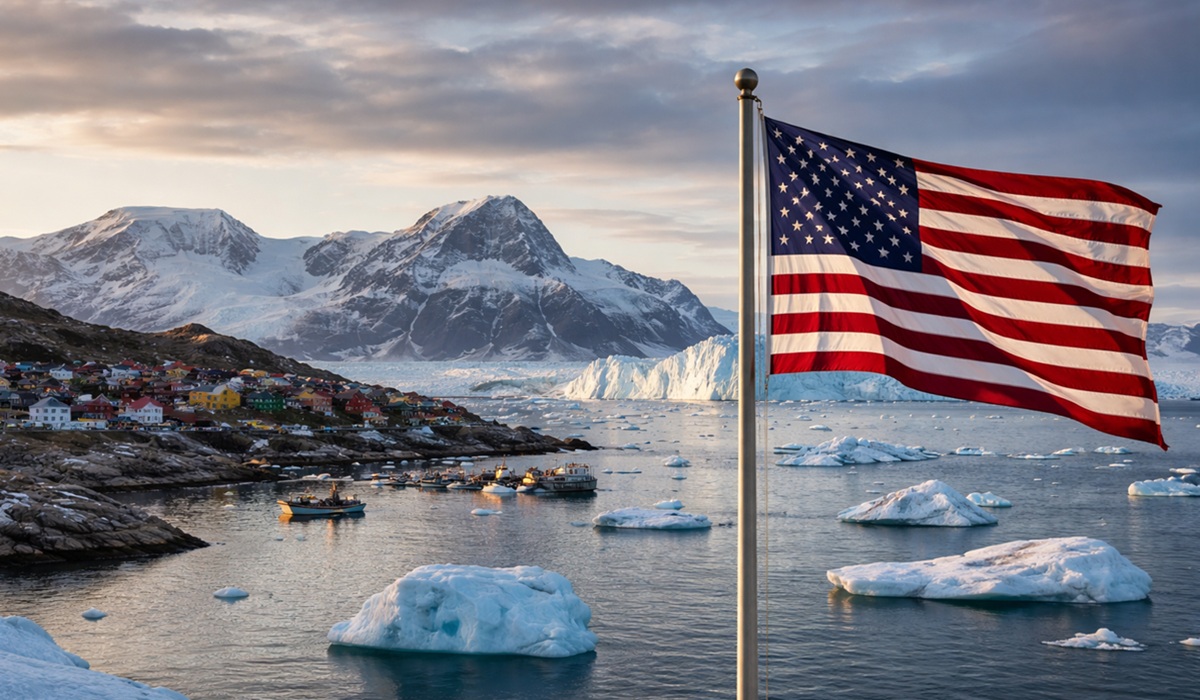
Reports that U.S. Secretary of State Marco Rubio is expected to prepare a proposal valuing the vast Arctic territory at roughly $700 billion have reignited a debate that has surfaced repeatedly for more than a century. While the idea of purchasing the world’s largest island is often framed as bold strategic thinking, history and economics suggest it is instead a costly illusion driven by anxiety, not opportunity.
The last serious attempt to acquire the territory occurred in 1946, when the United States quietly offered Denmark approximately $100 million in gold. That proposal, advanced under President Harry Truman, followed even earlier interest dating back to 1867, when American officials examined the possibility of acquiring northern lands during the same era as the Alaska purchase. In every instance, Copenhagen declined, and the matter was resolved diplomatically. Sovereignty was respected, alliances were preserved, and the Arctic remained governed by law rather than ambition.
What separates the current discussion from those earlier moments is not only the staggering valuation but the underlying assumption that ownership equals control. A $700-billion figure is not anchored in present economic output or near-term feasibility. It is rooted in speculation, fear of China, and a belief that territory can be converted into leverage simply by changing flags.
The existing economy of the island is modest. Fishing dominates exports, accounting for the overwhelming majority of revenue. Shrimp, halibut, and cod form the backbone of trade, with China standing as the largest single market for those products. From Washington’s perspective, that alone raises alarms. The logic follows that American ownership would provide leverage over a critical food supply chain while indirectly pressuring Beijing.
Yet fisheries alone cannot justify such a purchase. Even under ideal conditions, revenues would take generations to approach anything close to the acquisition cost. Marine stocks fluctuate, climate change disrupts ecosystems, and overexploitation risks long-term collapse. Political control does not override biology, and seafood exports cannot finance a near-trillion-dollar transaction.
The deeper obsession lies below the ice.
The Arctic landmass is believed to contain significant deposits of rare earth elements, uranium, zinc, lead, iron ore, nickel, cobalt, and potentially oil and gas offshore. These resources are often portrayed as the future cornerstone of Western supply-chain independence, particularly as the United States seeks to reduce reliance on Chinese processing capacity.
The reality is far less dramatic. Fewer than a dozen projects have reached advanced development stages, and only a handful of mines have ever operated at commercial scale. Dozens of exploration licenses exist on paper, but most remain speculative. Environmental resistance, Indigenous opposition, infrastructure gaps, and extreme climate conditions have stalled or terminated numerous ventures before they could begin.
Mining in this Arctic environment is not comparable to extraction in Nevada, Western Australia, or even northern Canada. Much of the territory remains covered by ice sheets exceeding a mile in thickness. Permafrost destabilizes foundations. There are no intercity road networks. Ports are limited and ice-bound. Energy infrastructure is sparse, and skilled labor must be imported at enormous cost.
Every bolt, vehicle, and replacement part would need to be shipped thousands of miles. Ice-class vessels, specialized drilling equipment, emergency response systems, worker housing, and year-round supply chains would require tens of billions in upfront investment before any meaningful extraction occurs. Seasonal constraints shorten operating windows, while melting ice introduces instability rather than accessibility.
In practical terms, the United States would likely achieve economically viable mining on the moon sooner than turning this Arctic territory into a profitable extractive engine within the next several decades. That comparison is not rhetorical flourish; it reflects the sheer mismatch between ambition and feasibility.
Defense arguments form the second pillar of the case. The island’s geographic position places it at the crossroads of North Atlantic and polar routes. The United States already maintains a strategic presence through Pituffik Space Base under long-standing agreements with Denmark. That presence provides missile warning, space surveillance, and Arctic monitoring without requiring sovereignty.
Full ownership would add little military value beyond what already exists. What it would do is fracture trust.
Denmark is a NATO ally. Any attempt to purchase or coerce control over its autonomous territory would be interpreted across Europe as a hostile political act. The implication that borders can be redrawn through financial pressure or implied force would reverberate far beyond the Arctic. It would validate fears that American security commitments are transactional rather than principled.
The consequences would be immediate. EU–U.S. relations would deteriorate sharply. Defense cooperation would be reassessed. Basing agreements across Europe could be renegotiated or withdrawn. Arctic governance frameworks would fracture. Instead of countering Russian and Chinese influence, Washington would find itself diplomatically isolated, managing crises of its own creation.
Rhetoric suggesting the territory could be obtained “by deal or force” only deepens those concerns. Such language undermines international law and reinforces perceptions of American imperial reflexes. Rather than strengthening bargaining power, it unifies opposition and erodes credibility.
There is also the human reality. The people who live there do not want to be American citizens. Polling consistently shows overwhelming resistance to annexation or absorption. The local political movement has been oriented toward greater self-determination, not integration into another state. Ignoring that reality strips the proposal of any moral legitimacy.
Arguments claiming the territory is “not really Danish” due to colonial history collapse under scrutiny. If that reasoning were accepted, no border on Earth would remain stable. By that logic, any powerful nation could assert claims over any region with a complicated past. The international system cannot survive such thinking.
For American taxpayers, the proposal borders on absurdity. Seven hundred billion dollars represents decades of investment in infrastructure, healthcare, education, or debt reduction. There is no credible pathway for that sum to be recouped within the lifetime of most Americans, absent massive subsidies and environmental degradation.
At a time when citizens face rising costs, housing shortages, healthcare strain, and aging public works, spending nearly a trillion dollars on an Arctic possession with fewer than 60,000 residents would be politically explosive. It would be perceived as elite fantasy disconnected from domestic reality.
Strategically, ownership does not equal control. Markets, alliances, technology, and diplomacy matter more than flags. The United States can counter Chinese influence through investment partnerships, transparent development frameworks, and respect for local autonomy. Arctic security is best strengthened through NATO cooperation, not by destabilizing it.
Ultimately, this proposal says less about the Arctic than it does about American power psychology. It reflects a belief that scale resolves insecurity, that acquisition substitutes for strategy, and that money can rewrite sovereignty. History suggests the opposite. Empires overextend not when they lack resources, but when they misjudge the cost of pride.
The island is not for sale in any meaningful sense. And even if it were, the price the United States would pay would not be measured solely in dollars, but in credibility, alliances, and the stability of the international order it claims to uphold.
About The Author