How To Tell if a Tree on Your Property Is Dead or Dying
- Casey Cartwright
- Home Improvement
- Tiger's Eye Advisory Group - Trending News
- December 30, 2025
Trees act as the majestic anchors of our landscapes, providing shade, beauty, and memories that last for generations. A healthy oak or maple tree can define a property, increase its value, and provide a habitat for local wildlife. However, even these giants have a lifespan, and recognizing when that life ends is crucial to the safety of your home and family. Below, we’ll show you how to tell if a tree on your property is dead or dying.
The most obvious indicators of a tree’s health appear in its canopy. Healthy trees produce lush foliage and new growth every spring. If you notice bare branches while other trees bloom, or if the leaves turn brown and brittle in the middle of summer, the tree is likely in distress.
You should pay close attention to the tips of the branches. A lack of buds or new twig growth can indicate that the tree is no longer growing and is in decline. Large, dead branches, also known as “widowmakers,” pose serious hazards. These branches lose flexibility and can snap without warning, posing a risk to anyone or anything beneath them.
As you move your inspection down from the canopy, examine the trunk for structural issues. Deep cracks or vertical splits in the bark suggest internal decay or structural failure. These fissures indicate that the tree is physically pulling itself apart or that the wood fibers are drying out and separating.
Cavities or hollow spots in the tree’s trunk also compromise its stability. While some animals may use these hollows for shelter, they indicate that the heartwood is rotting, leaving the tree with little support to withstand high winds.
While examining the trunk, look closely at the ground around the base and the bark itself for fungal growth. Mushrooms or shelf-like brackets growing on the wood signal significant internal rot, and are clear signs your tree needs immediate removal. These fungi feed on decaying organic matter, causing the tree to rot from the inside out. While the exterior may appear solid, the presence of fungus suggests the core may be deteriorating.
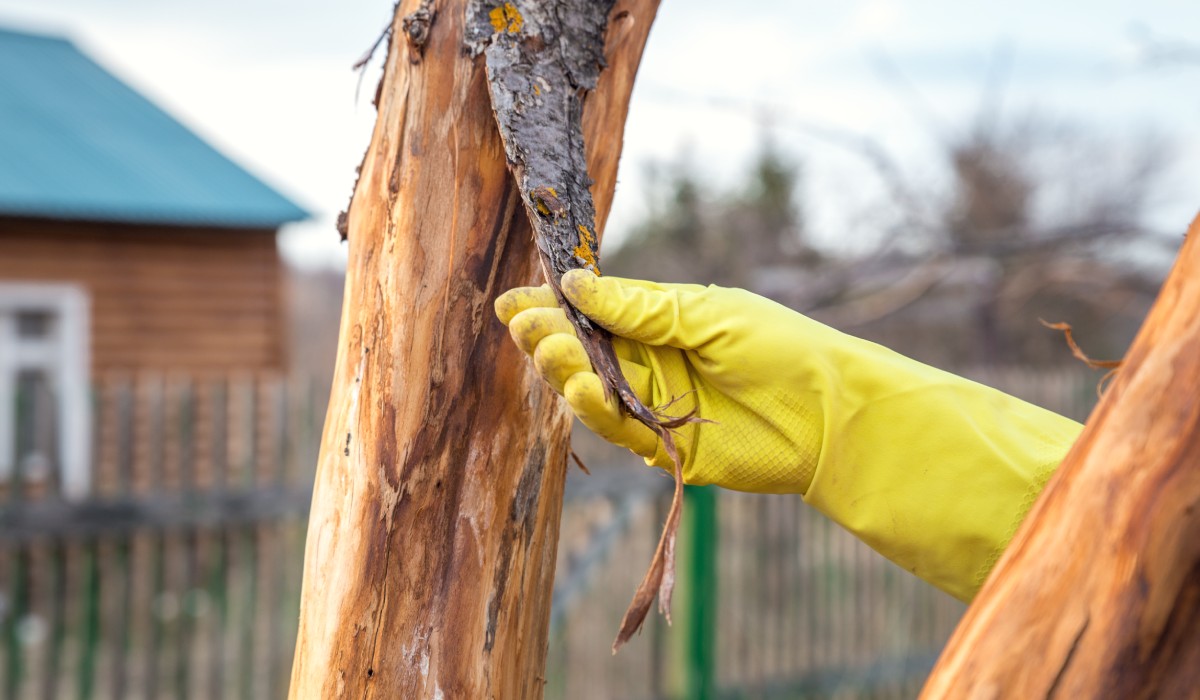
Sometimes it requires a close inspection in order to tell if a tree on your property is dead or dying. You can perform a simple scratch test to check for life beneath the bark. Select a few small twigs from different parts of the tree. Using a small knife or your fingernail, scratch away a small strip of the outer bark.
Healthy wood reveals a vibrant green layer beneath the surface, and the twig should bend without breaking. If you scratch away the outer layer and find brown, dry wood, or if the twig snaps with a crisp sound, that section of the tree is dead. If you see this dryness throughout multiple branches, the entire tree is likely beyond saving.
Suspecting a tree is dead can be unsettling, but ignoring the signs proves far more dangerous. If you identify any of these symptoms, contact a certified arborist immediately. Taking prompt action ensures your property remains safe and allows you to address the issue on your own terms, rather than waiting for a storm to force your hand.
About The Author