Peace Talks Without Peace: Why the War in Ukraine Keeps Slipping Further Into the Future
- TDS News
- Breaking News
- December 29, 2025
By: Donovan Martin Sr, Editor in Chief
Every new round of diplomacy surrounding the war in Ukraine arrives wrapped in the language of urgency and resolve. Each time, it is framed as a turning point — a moment when momentum might finally shift toward ending a conflict that has reshaped Europe’s security landscape and strained global politics. And yet, once again, the latest round of talks has produced more uncertainty than progress, revealing just how elusive peace remains.
The most recent effort has stalled amid renewed accusations from Russia that Ukrainian forces targeted a residential compound associated with President Vladimir Putin. Ukraine has categorically denied the claim, dismissing it as part of a familiar pattern of provocation and narrative warfare. Whether the allegation itself materially alters the military situation is almost secondary. Politically, it reinforces a cycle that has become depressingly predictable: accusation, denial, escalation of rhetoric, and a further hardening of positions that makes meaningful negotiation even more difficult.
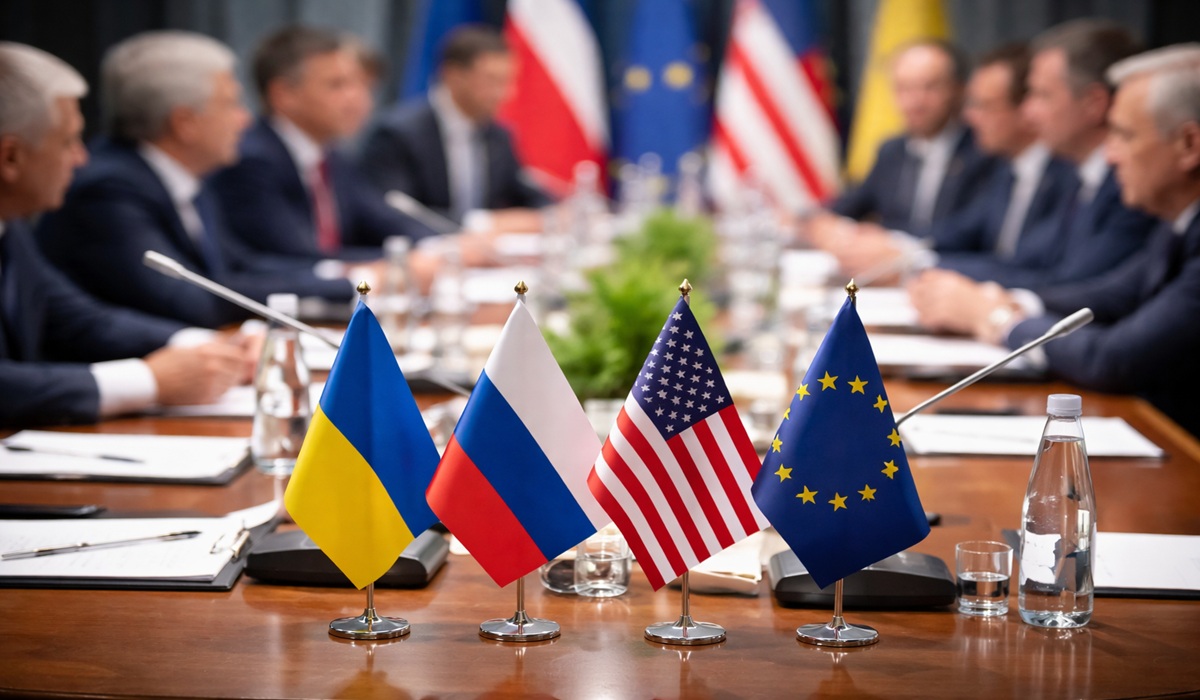
This latest breakdown is particularly striking given the extraordinary concentration of high-level diplomacy within a single week. Ukrainian President Volodymyr Zelensky began with talks in Halifax, meeting first with Canadian Prime Minister Mark Carney. He then traveled to engage with U.S. President Donald Trump, before holding further discussions with senior European Union leadership. On the surface, the optics suggested coordination, urgency, and a renewed push to shape an endgame.
Yet despite this flurry of meetings, the outcome has been conspicuously thin. No peace framework emerged. No concrete sequencing of concessions was outlined. No mechanisms for enforcement, verification, or phased de-escalation were publicly articulated. The order of the meetings mattered less than what they collectively revealed: unity among allies remains strong, but clarity about peace does not.
Instead, the diplomacy appeared focused on sustaining alignment rather than resolving the conflict itself. Statements emphasized support, resilience, and long-term commitment, but stopped short of addressing the central question facing all sides — what does an acceptable end to this war actually look like?
At the heart of the impasse is a set of positions that remain fundamentally incompatible. For Ukraine, territorial integrity is not a bargaining chip but a matter of national survival. Any agreement that locks in territorial losses risks political collapse at home and sets a precedent Kyiv cannot afford to accept. For Russia, withdrawal without tangible political or security guarantees would undermine the narrative used to justify the war domestically and weaken the credibility of its leadership.
These positions are not simply opposed; they are structurally locked against one another. Each side views compromise not as pragmatism, but as existential risk.
Complicating matters further is the role of external negotiators, particularly the United States. Washington’s involvement is unavoidable given the scale of its military, financial, and intelligence support for Ukraine. Yet that same involvement limits the scope of negotiation. From Moscow’s perspective, U.S.-led talks are inherently suspect, shaped by a broader strategic objective that extends beyond Ukraine to long-term containment of Russian power. From Kyiv’s standpoint, American backing is indispensable — but it also narrows the range of outcomes that can realistically be pursued.
This creates an uncomfortable but unavoidable reality: wars are rarely ended by negotiators who are deeply invested in their continuation, even indirectly. States do not mediate from neutrality; they mediate from interest. The United States’ interests in this conflict touch NATO cohesion, global deterrence, and the wider balance of power. Those interests do not always align neatly with rapid compromise.
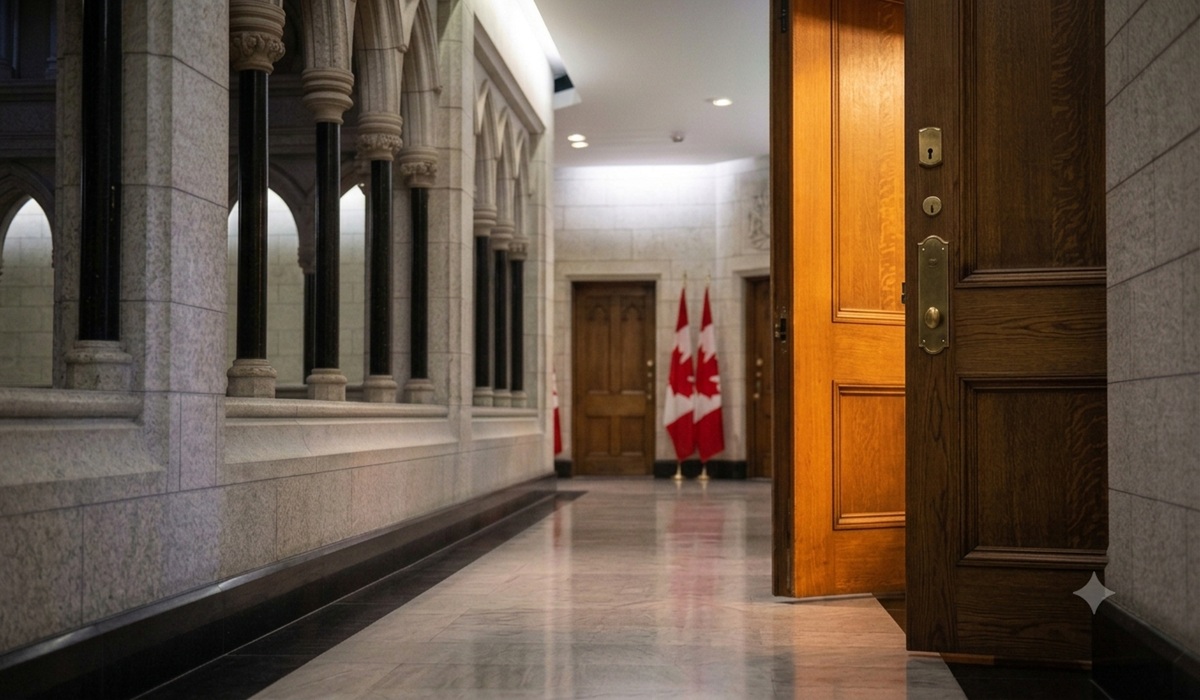
Canada’s role, while less central militarily, reflects a similar dynamic. Ottawa positions itself as a principled defender of international law and democratic sovereignty, yet remains firmly aligned with a Western strategy that prioritizes pressure over accommodation. Meetings with the Canadian Prime Minister reinforce political solidarity, but solidarity alone does not produce peace terms.
European Union leaders face their own constraints. Energy security, internal political pressures, and divergent national interests complicate their ability to push aggressively for a settlement that would require painful trade-offs. The result is a collective posture that favors endurance — managing the war — rather than resolution.
Taken together, these dynamics point toward a sobering conclusion. The conflict does not appear close to resolution. Instead, it is increasingly likely to drag into the next year, shaped less by breakthroughs than by attrition, fatigue, and shifting political calendars on all sides. The absence of visible concessions suggests that no party believes the costs of continuing have yet exceeded the costs of stopping.
Prolonged wars rarely end because one side suddenly changes course. They end when sustaining the conflict becomes untenable — economically, politically, or socially. For now, Ukraine continues to receive enough support to resist. Russia continues to absorb sanctions and battlefield losses while maintaining internal control. External actors continue to frame endurance as strategy.
In this environment, peace talks risk becoming placeholders rather than pathways — signals that diplomacy exists, rather than engines that move it forward. Each stalled round deepens mistrust and lowers expectations, making the next attempt even harder. Accusations like the alleged targeting of Putin’s residence are not merely rhetorical flare-ups; they are reminders of how easily narratives can be weaponized to justify another season of fighting.
What happens next is unlikely to be dramatic. There will be no sweeping ceasefire announced under television lights, no historic signing ceremony in a neutral capital. Instead, any real movement is more likely to occur quietly: back-channel communications, incremental adjustments, and subtle shifts driven by exhaustion rather than optimism.
For now, the reality remains stark. Despite constant declarations of commitment to peace and an unprecedented level of diplomatic engagement, the war remains governed by a logic that rewards endurance over compromise. Until that logic breaks — militarily, economically, or politically — peace will remain something everyone claims to want and no one seems positioned to deliver.
And that, more than any single allegation or failed meeting, may be the clearest indication of how far away the end still is.
About The Author