A Statement Designed to Be Ignored: How Global Affairs Canada Turned Condemnation Into Background Noise
- TDS News
- Canada
- December 27, 2025
By: Donovan Martin Sr, Editor in Chief
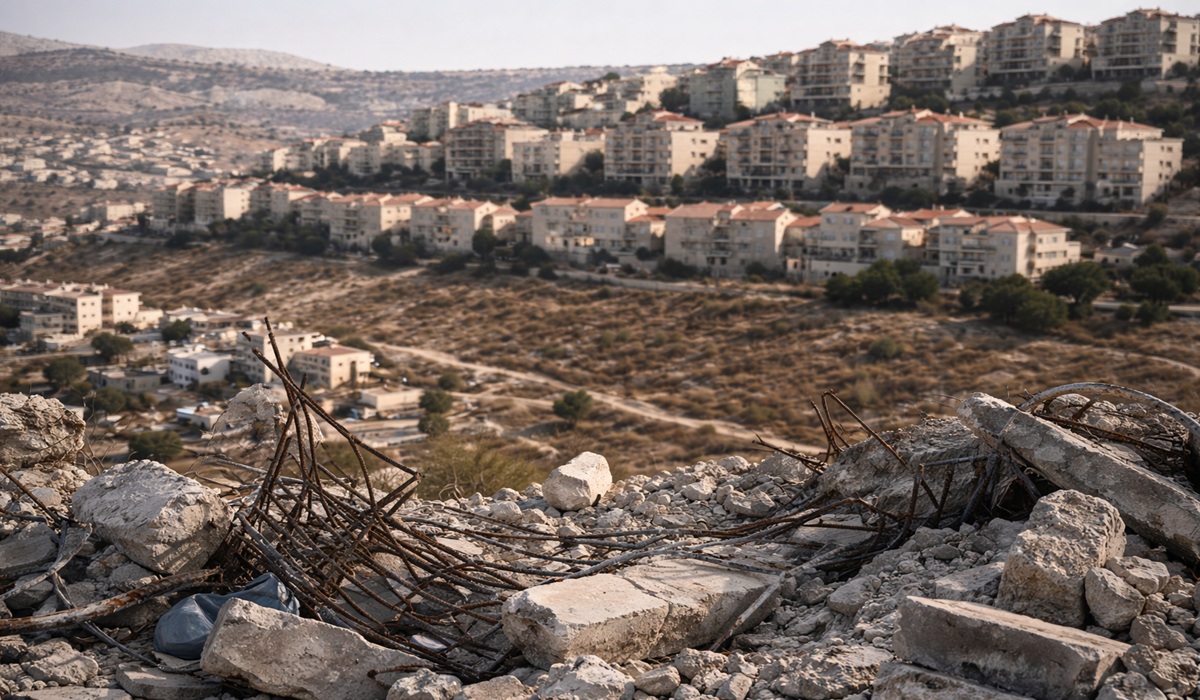
It has now been several days since Global Affairs Canada issued its joint statement condemning Israel’s approval of 19 new settlements in the occupied West Bank—and in that time, nothing has meaningfully changed. No pause. No recalibration. No escalation of diplomacy. No response from a serious Israeli political figure. The statement was so routine, so familiar, and so consequence-free that it barely registered at all.
That absence of reaction is not incidental. It is the point.
Released at 5:08 p.m. Eastern on Christmas Eve, the statement arrived precisely when Canadian newsrooms were closed, journalists were signing off, and public attention had already shifted elsewhere. Christmas Day ensured it would not be picked up. By the time normal news cycles resumed, the moment was gone. Governments have long understood this rhythm. It is why uncomfortable disclosures and low-priority announcements are routinely issued late on Fridays, weekends, and holidays. It allows institutions to say something without having to stand behind it.
This matters, because Global Affairs Canada is a 24-hour operation. Canada has an ambassador in Israel. Israel is eight hours ahead of Canada. If urgency had existed—real urgency—this statement could have been issued early that same morning, when journalists were still working, when international desks were staffed, and when scrutiny was unavoidable. That option was available. It was consciously not used.
And that choice reframes the entire statement.
On paper, the language followed the expected script: condemnation of settlement expansion, references to international law, citations of UN Security Council Resolution 2334, reaffirmations of a two-state solution. It sounded firm in isolation. But diplomacy is not only about wording. It is about timing, intent, and consequence. Issued when no one is listening, a statement stops being an instrument of policy and becomes an exercise in record-keeping.
The days since have made that plain. Israel did not respond in any meaningful way because it did not need to. There was no signal that this statement carried risk. No indication that behavior would be altered. No sense that escalation—or even sustained engagement—would follow. Experience has taught powerful states that such declarations are endpoints, not warnings.
That is the deeper issue Canadians are reacting to—not anger, but exhaustion.
There is no peace right now. Bombs are still flying. Military forces on all sides continue training, mobilizing, and preparing for further conflict. The reality on the ground is active, not theoretical. Yet the language of this statement speaks as if the region is suspended in a diplomatic holding pattern, awaiting the right words to restart a stalled process. That disconnect matters. Talking about “prospects for peace” while conflict is ongoing creates the illusion of stability where none exists.
This is where international law enters the conversation—and where the credibility problem deepens.
International law is repeatedly cited, but rarely enforced equally. Law, by definition, requires application. What exists today is not an operating legal system but a vocabulary—invoked selectively, enforced hierarchically, and suspended when politically inconvenient. We have seen swift sanctions imposed on weaker nations, on fragile economies, on states with little geopolitical leverage. Those actions are justified as necessary to uphold the rules-based order.
But when the violator is a close ally, the same tools suddenly become unthinkable. Sanctions are “not constructive.” Pressure is “unhelpful.” Accountability is endlessly deferred. This is not neutrality. It is a policy choice.
And Canadians notice.
This context cannot be separated from recent history. Under the previous administration, Canada’s foreign-policy posture was often perceived as hesitant and derivative. Even when relations with Washington were strained, Canadian positions frequently mirrored U.S. priorities rather than asserting independent judgment. Canadians were left asking why a country that prides itself on principled diplomacy appeared so subservient in practice.
That perception was reinforced by a Foreign Affairs department fronted by a minister who, at times, appeared plainly out of her depth—naïve in tone, reactive in posture, and lacking the gravitas required for a portfolio that demands strategic confidence. Canada did not look like a country leading or mediating. It looked like one managing optics and avoiding friction.
That legacy matters, because it shapes how today’s statements are received. When a department develops a reputation for language without leverage, its words stop carrying weight. Condemnations issued without consequence stop functioning as deterrents. They become background noise.
There is, at least rhetorically, an effort now to suggest something different: a Canada that wants to act in its own interest, guided by its own values, reclaiming its role as a truth-bearer and peacemaker rather than a follower. Canadians want that. They want a country that speaks clearly, applies standards consistently, and is prepared to be heard—even when it is uncomfortable.
But that role cannot be reclaimed through statements designed not to be noticed.
If this release from Global Affairs Canada is meant to be meaningful, then its execution undermines that claim. Timing is communication. Silence after the fact is communication. Repetition without consequence is communication. Together, they signal caution where clarity is needed and restraint where resolve is expected.
This is not about taking sides. It is about coherence. It is about acknowledging that international law cannot be credible if it is applied selectively. It is about recognizing that issuing condemnations during an active conflict, without follow-through, does not advance peace—it normalizes permanent instability.
As we move into 2026, the question is no longer whether Canada should issue statements. It is whether those statements are meant to matter. Effective diplomacy does not require belligerence, but it does require seriousness: communication when scrutiny is unavoidable, language that signals consequence, and consistency that earns respect.
Otherwise, statements like this will continue to signify exactly what this one did: a document issued, quietly archived, ignored by those it addressed, and read by Canadians as yet another reminder that saying the right thing is not the same as doing the right thing.
Words still matter—but only when they are tethered to reality, accountability, and the willingness to stand behind them.
About The Author