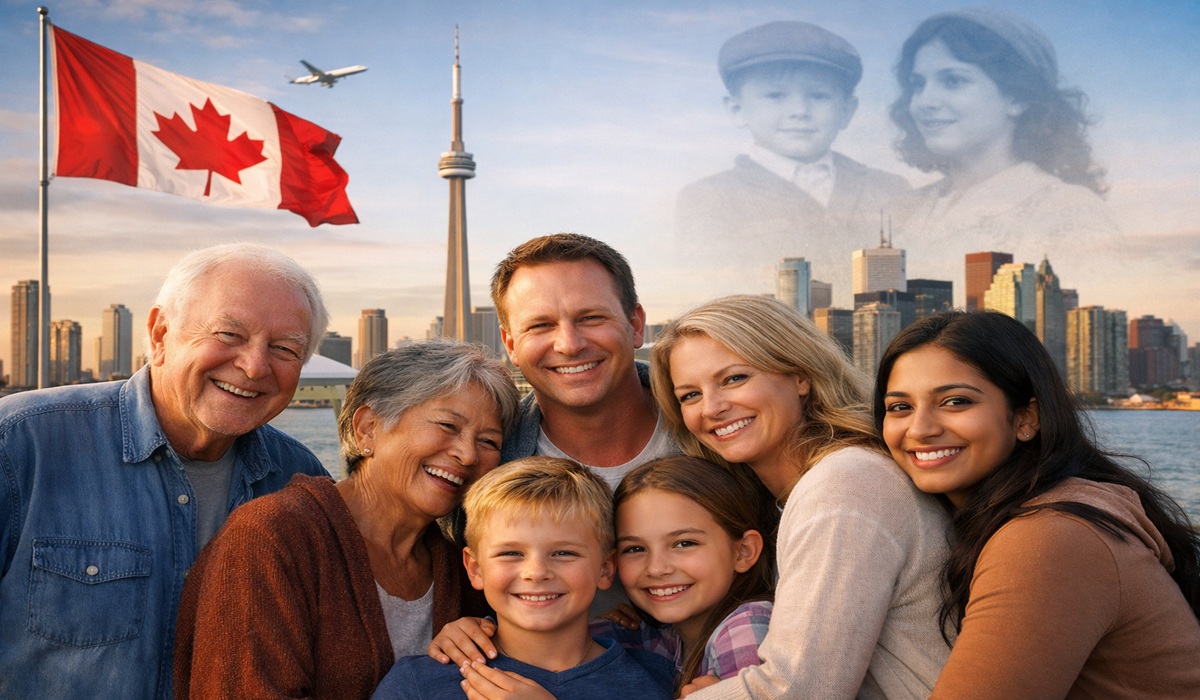
For years, “Lost Canadians” sounded like a poetic phrase. In reality, it was a bureaucratic wound. These were people who grew up believing Canada was theirs, because it was their parents’ country, their grandparents’ country, the place stamped into family stories and identity. Some held Canadian passports at one point. Some voted. Some paid taxes. Others never held documents at all but were raised Canadian in every way that mattered. Then, often without warning, they were told they were not Canadian. Not legally. Not on paper. Not anymore.
The group is far larger and more varied than many people realize. Lost Canadians include children of diplomats, military families posted abroad, aid workers, academics, and globally mobile professionals. They include people born overseas to Canadian parents who were themselves born outside the country, even if those parents later returned and built their lives in Canada. They also include people affected by older, now-abandoned rules that stripped citizenship because of marriage, age, or technical filing requirements. What links them all is not a lack of connection to Canada, but a system that treated citizenship as something fragile, easily broken by geography or timing.
This is where Bill C-3 enters the picture, not as an abstract piece of legislation, but as a response to a very human problem. Its significance lies in the fact that it shifts the conversation away from rigid generational cutoffs and toward something more grounded in reality: connection. Instead of asking only where someone was born, the law now asks whether Canada has genuinely been part of that family’s life. That is a profound change in tone as much as in law.
Before this reform, Canada enforced a hard first-generation limit on citizenship by descent. A Canadian born in Canada could pass citizenship to a child born abroad, but that child could not pass it on again if their own child was also born outside the country. It did not matter if the family moved back to Canada later, paid taxes, raised their children here, or served the country in some capacity. The line was absolute. Once crossed, citizenship simply stopped. Over time, that rule created outcomes that felt arbitrary, even cruel, and courts began to agree.
The updated framework recognizes that modern Canadian families do not all live neatly within borders. Under Bill C-3, citizenship can now be passed beyond the first generation, provided the Canadian parent can demonstrate a substantial connection to the country, usually through time physically spent living in Canada. That requirement is important. It signals that citizenship is not being handed out endlessly with no anchor, but it also acknowledges that real belonging is built through lived experience, not just a birthplace.
Equally important is what the law does looking backward. Many people who were excluded under the old rules are now recognized as Canadian automatically. Others finally have a clear and fair pathway to citizenship where none existed before. For those individuals, this is not a policy tweak. It is the restoration of identity, legal certainty, and in some cases, the right to live and work in the only country they have ever considered home.
In an international context, Canada’s new approach sits in a thoughtful middle ground. Some countries allow citizenship by descent to stretch back generations with minimal conditions. Others impose strict limits that make nationality difficult to pass on at all. By tying citizenship transmission to meaningful connection, Canada has chosen a model that reflects global mobility without abandoning the idea that citizenship should mean something tangible. It is more flexible than what existed before, but also more coherent.
What makes this moment notable is not just the technical fix, but the quiet acknowledgment behind it. Bill C-3 is an admission that the system failed people, that law drifted away from fairness, and that identity cannot be reduced to a single line in a statute written decades ago. For Lost Canadians, the change is deeply personal. For the country, it is a recalibration of what it means to belong.
In the end, this legislation is less about expanding citizenship and more about repairing it. It recognizes that Canada’s story has always been shaped by movement, migration, and families whose lives cross borders. By centering connection rather than accident of birth, Bill C-3 brings citizenship law closer to the way Canadians actually live, and closer to the values the country claims to hold.
About The Author