After the Summit: Measuring Canada’s G7 Moment and the Road to 2026
- Ingrid Jones
- Canada
- December 19, 2025
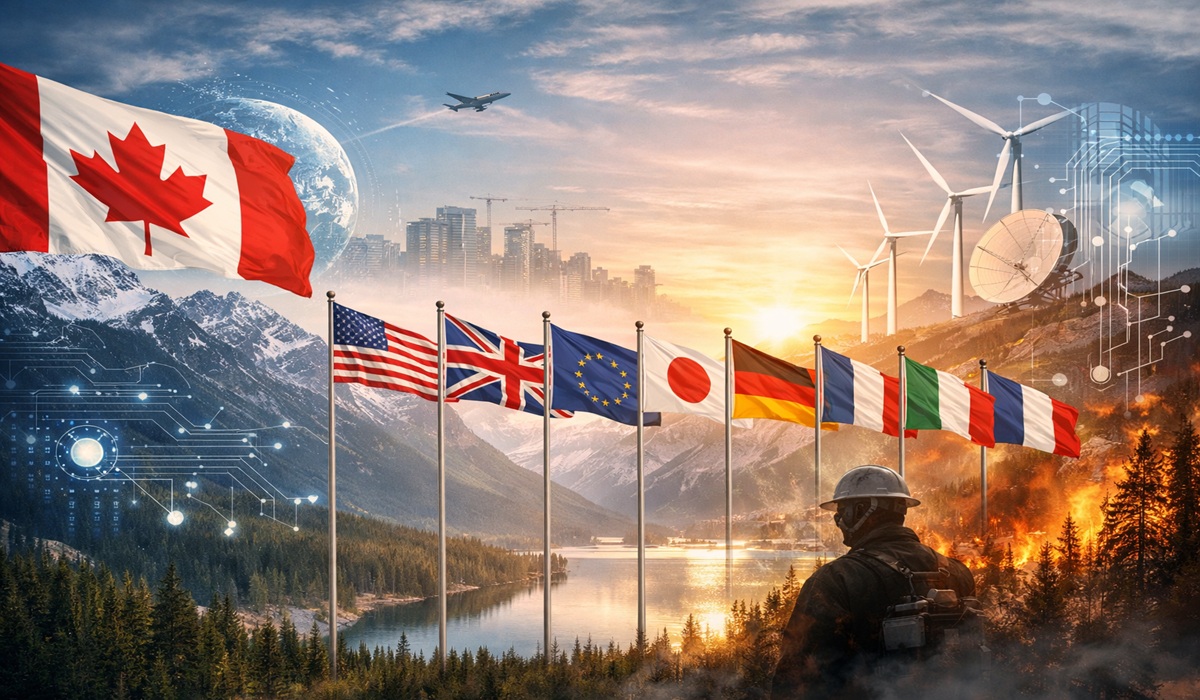
As the G7 presidency comes to a close, the most important question is not how many statements were issued or how many billions were announced. The real test is whether this moment leaves Canadians better positioned for what lies ahead. That is a harder question to answer, and it deserves an honest assessment.
The G7 itself was born during a period of uncertainty, when economic shocks and geopolitical tension threatened global stability. Today’s environment feels uncomfortably familiar. War in Europe, fragile ceasefires in the Middle East, climate-driven emergencies, and rapid technological disruption all formed the backdrop of this year’s agenda. Against that reality, the ambition behind the presidency was understandable. The challenges are broad, and the response reflected that scale.
At the centre of the year’s work was security. Support for Ukraine remained a defining pillar, with additional military assistance, expanded loan mechanisms, and sustained diplomatic pressure aimed at deterring further aggression. These efforts were paired with continued coordination on sanctions and energy price caps, reinforcing a collective approach rather than isolated national responses. Whether these measures shift long-term outcomes remains an open question, but the consistency of focus mattered.
Climate resilience emerged as another area where rhetoric met lived experience. Wildfires are no longer theoretical risks; they are annual events with economic and human costs. The Kananaskis Wildfire Charter acknowledged that preparedness, data sharing, and early intervention are now core security concerns. Investments in satellite monitoring and coordination may not make headlines, but they speak to a recognition that climate policy has moved from aspiration to necessity.
Technology and energy policy formed a second major thread. Critical minerals, artificial intelligence, and quantum technologies were treated not as future curiosities but as present-day strategic assets. Efforts to align supply chains, set shared standards, and encourage commercialization reflected a desire to move beyond research toward practical deployment. At the same time, the link between digital expansion and energy demand was addressed more directly than in past forums, particularly as data centres and AI systems place new strain on grids.
Yet global leadership is only meaningful if it translates into domestic resilience. Announcements made on the world stage inevitably invite scrutiny at home. People are right to ask how international commitments connect to affordability, productivity, employment, and public services. Strategic alignment abroad does not automatically resolve pressure points at home, and it should not be treated as a substitute for domestic delivery.
This tension was visible across multiple files. Support for Ukraine aligns with long-term security interests, but it also exists alongside unresolved questions about defence procurement and industrial capacity. Investments in advanced technologies signal ambition, yet skills shortages and uneven infrastructure remain barriers. Energy security discussions carry weight internationally, even as internal debates continue over grid capacity, project timelines, and transition costs.
None of this diminishes the value of the presidency. It clarifies what comes next. Setting an agenda is only the first step; execution determines credibility. The true legacy will be measured in whether partnerships endure, projects advance, and commitments survive beyond summit cycles.
There is also a broader question about the relevance of the G7 itself. Influence today is less concentrated than it once was. Inviting non-member countries into the conversation reflected an understanding that cooperation now depends on flexible coalitions rather than fixed blocs. The challenge will be ensuring those relationships produce tangible outcomes rather than symbolic inclusion.
As France prepares to take over in 2026, momentum is frequently cited. Momentum, however, is fragile. Critical mineral alliances, infrastructure financing mechanisms, and technology frameworks require sustained political attention. Without it, they risk becoming well-documented intentions rather than durable change.
For this country, the next year will matter more than the last. Economic uncertainty persists. Climate risks are accelerating. Technological shifts are outpacing regulation and workforce readiness. The groundwork has been laid; whether it delivers confidence and stability will determine how this period is remembered.
A successful G7 presidency should ultimately strengthen trust at home — trust that global engagement serves national interests, and trust that long-term strategy leads to visible progress. Leadership abroad carries weight, but it is progress at home that defines success.
The summit year has ended. The responsibility it created has not.
About The Author