A Long-Awaited Moment: The New York Knicks Win the NBA Cup and Reignite a City
- Naomi Dela Cruz
- Sports
- December 17, 2025
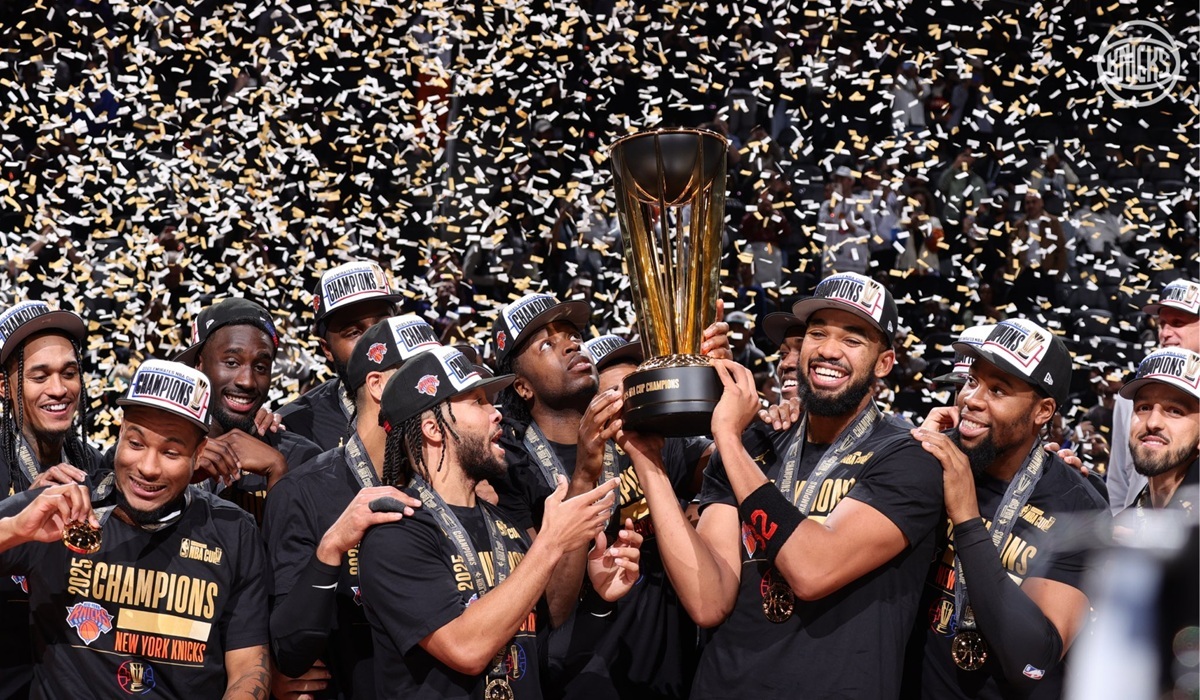
Image Credit: New York Knicks
For a franchise defined as much by patience as passion, the New York Knicks lifting the NBA Cup is more than a trophy moment — it is a symbolic release decades in the making. By winning the Cup, the Knicks now stand alongside the Los Angeles Lakers and Milwaukee Bucks as champions of the NBA’s newest competitive prize, marking a tangible shift in how the league’s most scrutinized team is once again being talked about. Not as a punchline, not as a rebuilding project, but as winners.
For New York, it has been a long time since silverware felt real. While the NBA Cup is not the same as an NBA Finals championship, it still matters — especially for a franchise whose last championship banners date back generations. Winning something meaningful, under bright lights and national attention, changes how players see themselves, how fans engage, and how the organization carries itself forward.
This victory is inseparable from the Knicks’ evolving identity. A new coaching voice and a clearly articulated philosophy have reshaped the team’s DNA. The Knicks now play with structure, defensive accountability, and a belief system that rewards effort over reputation. Possessions matter. Rotations matter. Roles are clear. That may sound basic, but for a franchise that once cycled endlessly through false starts and half-measures, clarity has become its greatest asset.
The players feel it. Veterans gain validation that buying into discipline pays off. Younger players gain confidence knowing they are part of something functional and purposeful. In a league driven by stars, the Knicks’ Cup run underscored the value of cohesion — of a team that wins not by flash, but by execution.
For the city, the impact is immediate and emotional. New York basketball is different when the Knicks are relevant. The energy bleeds into subway conversations, bar televisions, and playground debates. A Cup win gives fans permission to believe again without irony. It also restores a sense of civic pride — the idea that Madison Square Garden is once more a place where meaningful basketball happens, not just spectacle.
One of the most overlooked aspects of the NBA Cup is its financial and developmental ripple effect, especially for players on two-way contracts and those grinding through the G League pipeline. The Cup comes with direct financial bonuses, and for players who are not on max contracts, that money matters. For two-way players, it can represent a life-changing infusion — recognition that their contributions count, even if they don’t dominate headlines.
Just as important is visibility. Cup games are played with playoff-level intensity, on national stages, against elite competition. For fringe players, strong performances in these moments can accelerate careers, influence contract decisions, and reshape how front offices evaluate depth. The Knicks’ win sends a signal down the organizational ladder: development is real, opportunity exists, and effort is rewarded.
So what exactly is the NBA Cup, and why does it matter?
The Cup was introduced to inject urgency and competitiveness into the early and mid-season calendar. Instead of November and December games blurring together, the Cup creates a structured tournament within the season, complete with group play, elimination rounds, and a championship game. It raises stakes without altering the traditional playoff format, offering teams a parallel path to success.
Its significance lies in culture. Teams that take the Cup seriously often reveal who they are. It tests coaching adaptability, roster depth, and mental toughness. Winning it doesn’t guarantee postseason success, but it establishes habits that often translate later. For franchises like the Knicks — hungry, disciplined, and seeking legitimacy — the Cup is not a gimmick. It is a proving ground.
By joining the Lakers and Bucks as NBA Cup champions, the Knicks insert themselves into a short but meaningful list. It doesn’t erase past frustrations, but it reframes the present. It tells the league that New York is no longer waiting for relevance — it is building it.
For the players, the city, and the organization from the G League to the Garden rafters, this Cup is not the end of the journey. It is the first clear marker that something has changed. 🏀
About The Author