Fear Mobilizes Donors, But Leadership Should Be Restraint?
- TDS News
- Tiger's Eye Advisory Group - Trending News
- Oceania
- December 16, 2025
BY: Donovan Martin Sr, Editor in Chief
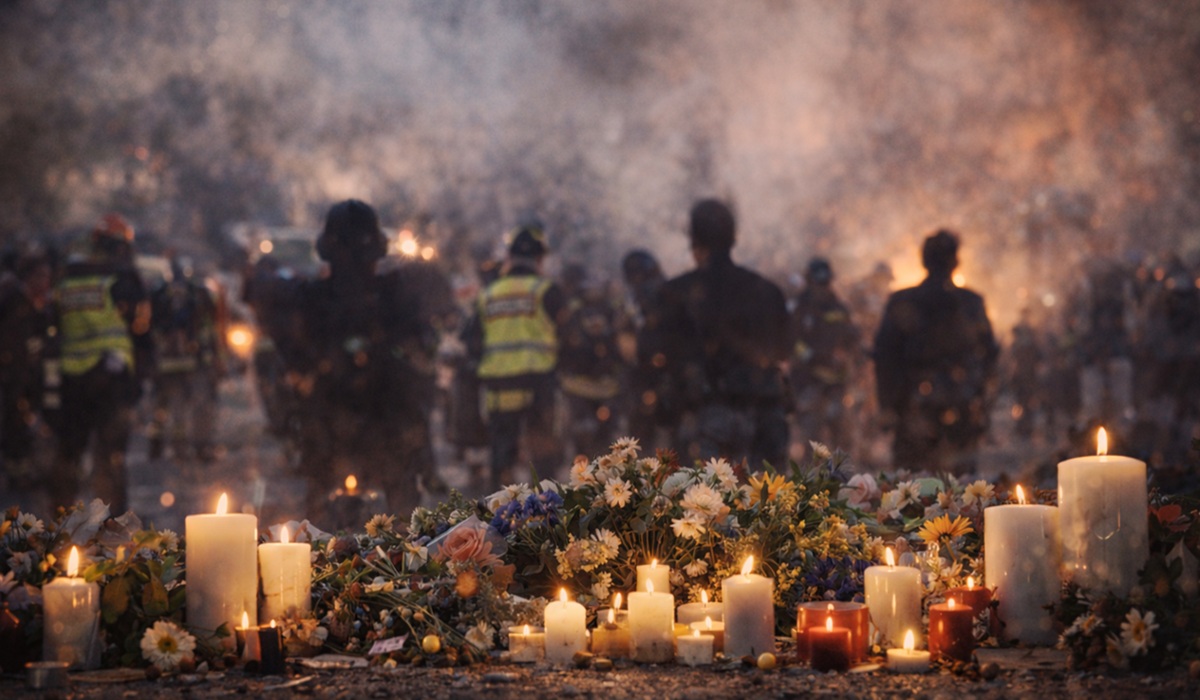
A crowded public gathering in Bondi, a beachside area of Sydney, descended into chaos when a gunman opened fire, killing multiple people and injuring others. What should have been a peaceful community event became a national tragedy. Families lost loved ones. Witnesses described panic, confusion, and scenes that will not leave them for the rest of their lives. Before investigators had completed their work—before motive, mental state, or wider context had been responsibly established—the shooting was pulled into the global political bloodstream.
That is where the real damage began.
Almost immediately, political figures outside Australia began assigning meaning to the violence. Israeli Prime Minister Benjamin Netanyahu publicly suggested that the attack was a consequence of Australia’s perceived support for Palestine—an assertion made without evidence, without restraint, and without regard for the victims or the Australian public. In the United States, Senator Lindsey Graham used social media to amplify similar insinuations, framing the tragedy as part of a broader ideological war and feeding an online audience primed for outrage.
These statements were not careless. They were deliberate acts of narrative construction.
What they ignored—conveniently and tellingly—were the actual facts emerging on the ground. One of the people who intervened during the attack, who disarmed a gunman and attempted to stop further loss of life, was a Muslim man. He was shot multiple times while trying to protect his fellow Australian citizens, many of whom were Jewish. That reality alone dismantles the lazy, dangerous story being pushed from afar.
This is precisely why the manufactured narrative of “Palestinian versus Jewish” must stop. Real life does not conform to the cartoonish divisions politicians rely on. In moments of genuine crisis, people do not act as ideological avatars—they act as human beings. Courage does not belong to a religion. Compassion does not have a flag. And violence committed by an individual does not suddenly become a verdict on an entire people.
Yet modern politics thrives on pretending otherwise.
In the United States, mass shootings occur with relentless regularity—hundreds every year. When the violence is domestic, the language softens: lone actors, troubled individuals, tragic inevitability. But when violence can be tied, however loosely, to religion or foreign conflict, it is immediately inflated into proof of a broader enemy. This double standard is not an accident. It is a strategy.
Blaming Muslim communities does nothing to improve safety. Pitting Jewish people against Palestinians does nothing to bring justice or peace. These narratives exist for one reason only: they are profitable. Fear mobilizes donors. Hate hardens voting blocs. Outrage keeps people distracted from policy failure, corruption, and systemic neglect.
That is why leaders who traffic in this rhetoric keep doing it.
But leadership is not measured by who can inflame the fastest or post the sharpest line online. Leadership is restraint. Leadership is accuracy. Leadership is refusing to turn victims into props and rescuers into inconvenient footnotes because their existence contradicts a useful story.
We cannot accept this as normal.
It should be unacceptable for prime ministers and senators to exploit fresh tragedy to validate geopolitical talking points. It should be unacceptable to imply collective guilt in the absence of evidence. And it should be unacceptable to erase acts of cross-community courage simply because they undermine a narrative built on division.
The Bondi attack was an act of terrorism. What followed was an act of political opportunism. One deserves mourning and justice. The other deserves to be called out and rejected.
The truth is this: coexistence is not naïve—it is already happening. It happens every time someone runs toward danger to save a neighbor, regardless of faith. The only people insisting that we cannot live together are those who benefit from convincing us that we shouldn’t.
And that is where this must end—not with more blame, not with more fear, but with a clear refusal to let tragedy be turned into a weapon by those who claim to lead.
About The Author