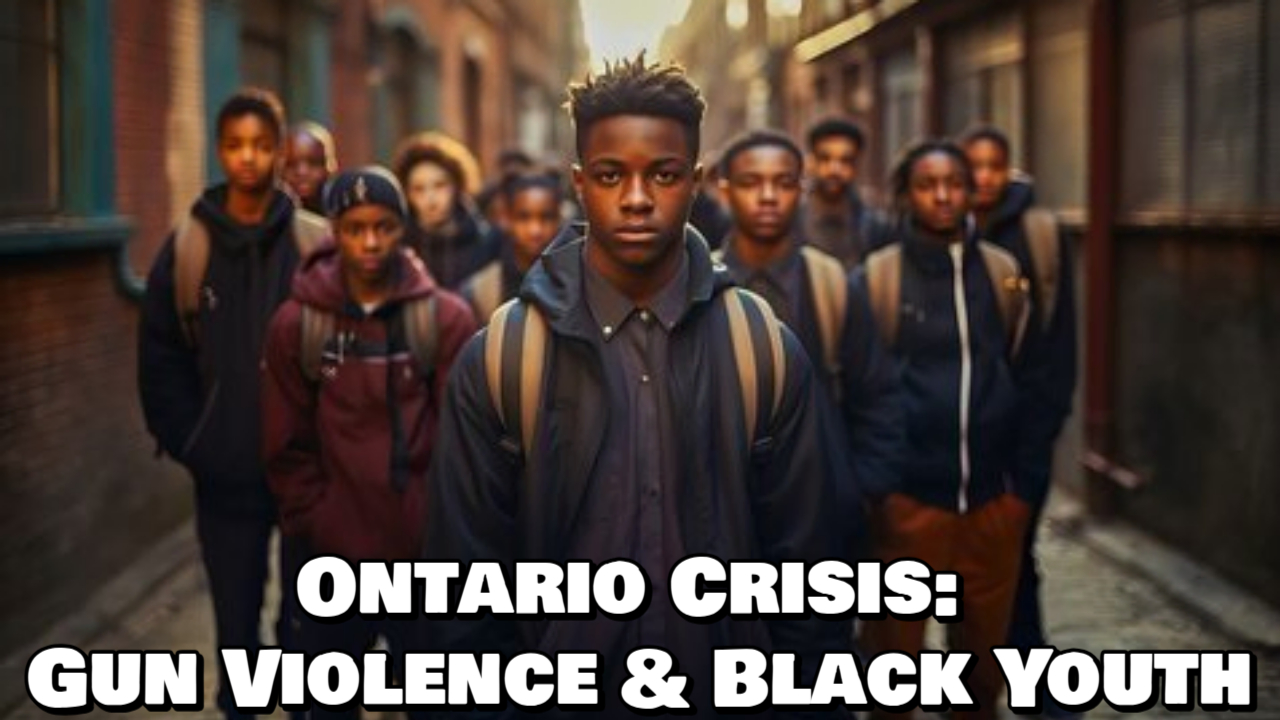
Across Ontario, a troubling trend is emerging: Black children, some as young as 12 years old are increasingly involved in serious crimes involving firearms. These are not isolated incidents. They are part of a growing pattern that demands urgent attention and deep reflection from both institutions and communities alike.
The presence of a firearm in the hands of a 12- 17 year-old is not just shocking, it is symptomatic of a larger breakdown. These are not hardened criminals. These are children. And while the justice system is quick to respond with charges, many demanding they be “tried as adults” but the deeper, more critical questions remain largely unasked.
Where are the adults?What’s happening inside these homes, these schools, these neighbourhoods, that children are turning to firearms before they’ve even entered high school?
Are they bringing lured into this life?
Firearms do not simply appear in a child’s backpack. Someone, an adult, somewhere put them within reach. Whether directly or through neglect, it is adults who create the conditions where violence becomes an option for the young.
And yet, public discourse continues to focus almost entirely on the acts themselves: the charges laid, the police response, the court dates. The children involved are flattened into headlines, stripped of context and complexity. Little is said about the
environments that failed them long before a crime was committed.
This is not an attempt to excuse criminal behaviour. These are serious acts that come with real consequences. But focusing solely on punishment misses the point. It also misses an opportunity for intervention.
Ontario’s Black communities are no strangers to systemic barriers: intergenerational poverty, racial profiling, under-resourced schools, and limited access to mental health support all contribute to the vulnerability of youth. These pressures, when combined with weak support systems and fractured family dynamics, create a perfect storm.
But the responsibility doesn’t end with policy. There is also a profound need for intra-community accountability.
If children are carrying guns at 12, then the adults in their lives have failed them somewhere along the way. Whether it’s absentee parents, overwhelmed caregivers, or entire systems that have disengaged, we must acknowledge that a child in crisis rarely gets there alone.
This crisis belongs to all of us.
The question is not only why these children are carrying weapons, but also why they feel the need to. What protection or power are they seeking that they aren’t getting elsewhere? What void is being filled by violence?
Addressing this issue means going beyond reactive measures. It means investing in the ecosystems that raise children: family, school, faith, community centres, mentorship programs. It means building safe spaces where Black youth are seen, valued, and supported not criminalized.
And it means shifting the narrative from “lock them up” to “how did we get here and how do we stop it from happening again?”
Because if society only responds to these children with courtrooms and cages, we are compounding the problem, not solving it. If the first meaningful adult intervention in a child’s life comes from a judge, we are far too late.
Ontario is at a crossroads. The stakes are nothing less than the future of its youth.
We cannot keep looking at these children as the problem.We must begin looking at the conditions that produced the problem and the adults who allowed it to fester.
Until we do, the headlines will continue. The statistics will grow. And more of our children, babies, really – will be lost to systems that were never designed to hold their innocence in the first place.
About The Author