$30M Meth Seizure at Abbotsford Border Raises Trafficking Concerns
- Ingrid Jones
- Canada
- February 11, 2026
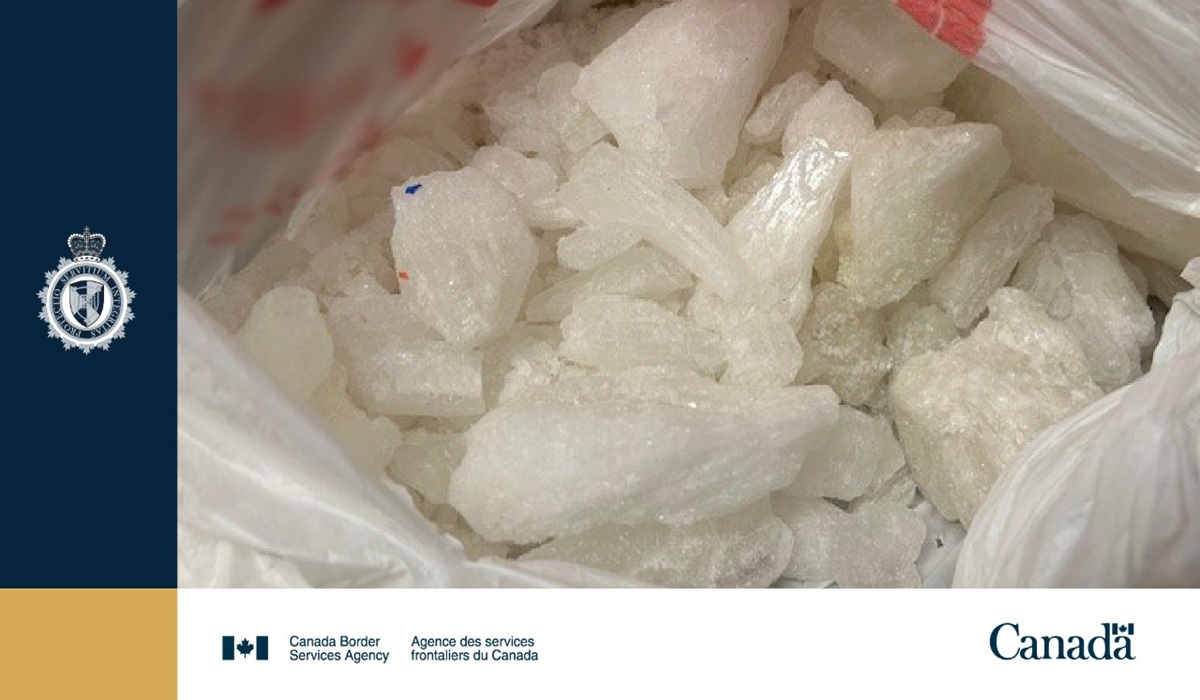
A major drug bust at one of British Columbia’s busiest border crossings has renewed attention on the scale, sophistication, and persistence of cross border trafficking into the country. Federal authorities confirmed that more than 300 kilograms of methamphetamine were intercepted at the Abbotsford Huntingdon port of entry, marking the largest narcotics seizure ever recorded at that location. The arrest and the circumstances surrounding the discovery are now prompting deeper questions about how such massive quantities continue to move across international borders and what is driving the surge in organized drug smuggling operations.
The seizure took place on November 22, 2025, when border services officers conducted an inspection of a commercial truck returning from the United States. With the assistance of a detector dog team, officers located twelve boxes hidden within the vehicle and trailer. Inside those boxes was a staggering 314 kilograms of methamphetamine. The driver, identified as Satnam Singh, was taken into custody and later transferred to RCMP Federal Policing in the Pacific Region through the Integrated Border Enforcement Team. Charges were laid under the Controlled Drugs and Substances Act, including possession for the purpose of importation and possession for the purpose of trafficking.
Officials say the operation prevented a massive quantity of illegal drugs from entering circulation. Public Safety Minister Gary Anandasangaree described the seizure as another example of front line enforcement stopping dangerous substances before they reach communities. Regional leaders from both the Canada Border Services Agency and the RCMP emphasized that the arrest reflects ongoing coordination between agencies to disrupt organized crime and dismantle international trafficking networks.
While the seizure itself is significant, the larger question being asked by investigators and policymakers alike is why such large shipments continue to be attempted. The answer is complex and tied to several overlapping factors that have made methamphetamine trafficking increasingly attractive to organized crime groups. Demand remains high across North America, and the drug is relatively cheap to produce compared to other narcotics. Synthetic drugs do not rely on crops or seasonal cycles, which means production can continue year round in hidden labs. That steady supply creates a constant flow of product that traffickers are motivated to move across borders as quickly and as quietly as possible.
Profit margins are another major driver. Methamphetamine can be produced in bulk and then sold in smaller quantities at street level for significant financial return. Organized crime groups view the cross border transport of drugs as a high risk but high reward enterprise. Even if some shipments are intercepted, the potential profits from successful deliveries are enough to keep networks operating. This financial incentive is one of the strongest forces behind the persistence of trafficking attempts.
Investigators also point to the structure of modern criminal organizations. Many trafficking operations are transnational, meaning they operate across multiple countries with layered supply chains. Production may occur in one region, transport arranged through another, and distribution handled by separate networks. This fragmentation makes enforcement more difficult because dismantling one link in the chain does not necessarily stop the entire operation. Instead, groups adapt quickly, changing routes, methods, and concealment tactics to stay ahead of detection.
The use of commercial vehicles is not uncommon in large scale smuggling attempts. With thousands of trucks crossing the border daily carrying legitimate goods, traffickers often try to blend in with normal trade. Concealment within cargo compartments or hidden storage areas is designed to avoid suspicion. Border services officers rely on intelligence, inspections, and specialized tools like detector dogs to identify risks among the vast volume of cross border traffic.
Data from the Pacific Region underscores the scale of the challenge. In 2025 alone, officers made more than ten thousand illegal narcotic seizures in the region, including over a thousand kilograms of methamphetamine. Detector dog teams carried out tens of thousands of searches, leading to the discovery of drugs, firearms, currency, and other contraband. These numbers suggest not only strong enforcement efforts but also a steady stream of trafficking attempts.
Officials say intelligence gathering plays a crucial role in identifying threats before they reach the border. Information sharing between domestic and international partners helps pinpoint high risk shipments, suspicious travel patterns, and potential organized crime activity. The government has also invested heavily in strengthening border security, with funding directed toward new tools, technology, and expanded front line capacity. The goal is to increase detection rates and make it harder for traffickers to exploit vulnerabilities.
Still, the fact that such a large shipment was attempted raises concerns about the scale of operations behind the scenes. When hundreds of kilograms are moved at once, it suggests coordination, funding, and planning at a level far beyond individual actors. Law enforcement believes these cases are often connected to broader networks that operate across provinces and countries, using a combination of legal trade channels and covert methods to move product.
Beyond the immediate legal consequences for those involved, authorities stress the broader social impact. Methamphetamine distribution contributes to addiction, crime, and community harm. Every major seizure is seen as a disruption not only to a trafficking operation but also to the downstream effects that the drug can have on public health and safety.
For now, the investigation continues as police work to determine the full scope of the network behind the shipment. Officials say enforcement alone is not the only answer, but it remains a critical part of reducing supply and protecting communities. The Abbotsford Huntingdon interception stands as a reminder that while enforcement agencies are making significant strides, the forces driving the drug trade remain powerful, persistent, and constantly evolving.
About The Author